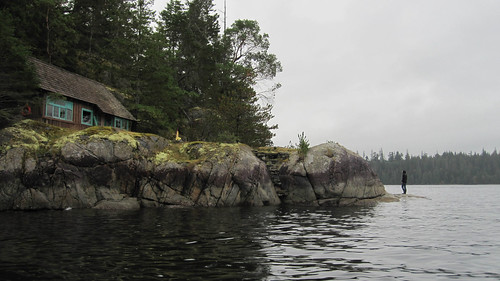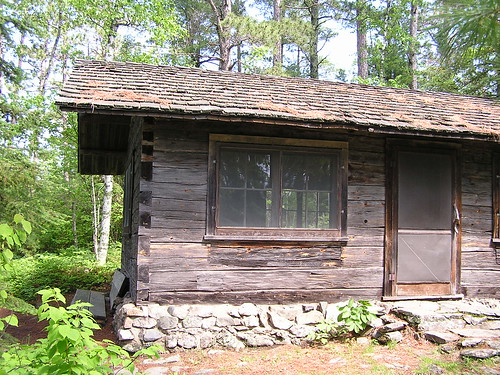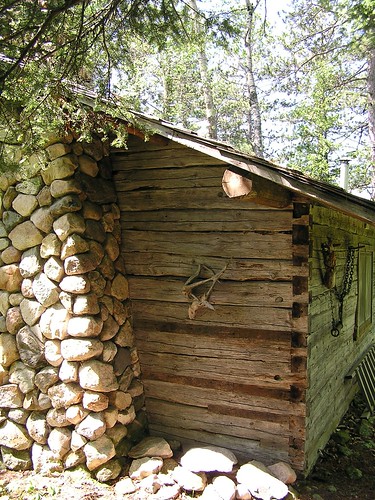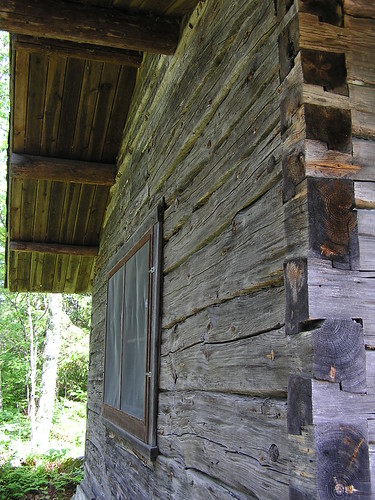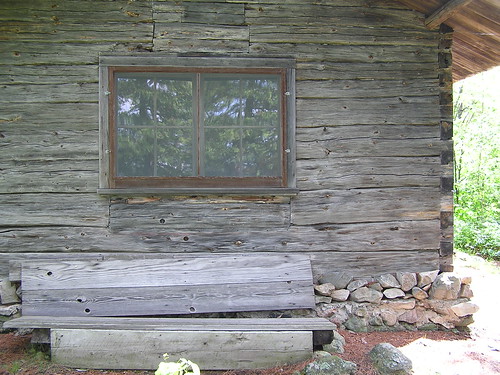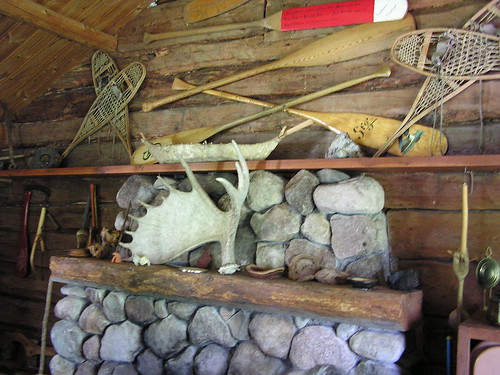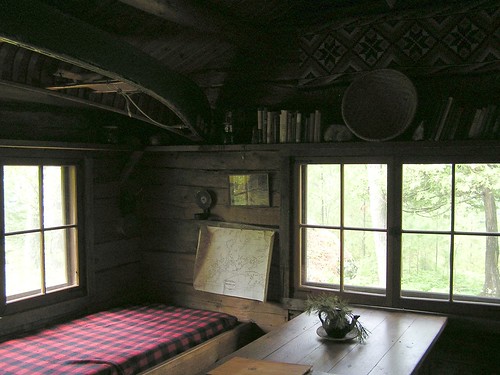
El tema central de este Blog es LA FILOSOFÍA DE LA CABAÑA y/o EL REGRESO A LA NATURALEZA o sobre la construcción de un "paradiso perduto" y encontrar un lugar en él. La experiencia de la quietud silenciosa en la contemplación y la conexión entre el corazón y la tierra. La cabaña como objeto y método de pensamiento. Una cabaña para aprender a vivir de nuevo, y como ejemplo de que otras maneras de vivir son posibles sobre la tierra.

domingo, 22 de enero de 2012

La cabaña estudio de Charles Russell, un verdadero cowboy y artista


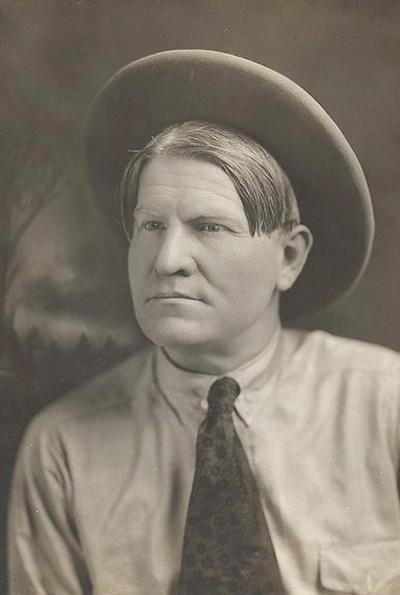
Charles M. Russell
Portrait of CM Russell,1900, Smithsonian Institution

CHARLES M. RUSSELL (1864-1926)

Like Frederic Remington, Charles M. Russell was born to moderate wealth. A native of St. Louis, Missouri, Russell first came to Montana as a boy of 16 with a dream of becoming a real cowboy. He was so captivated with the West he chose to stay and fulfill his childhood fantasy. 
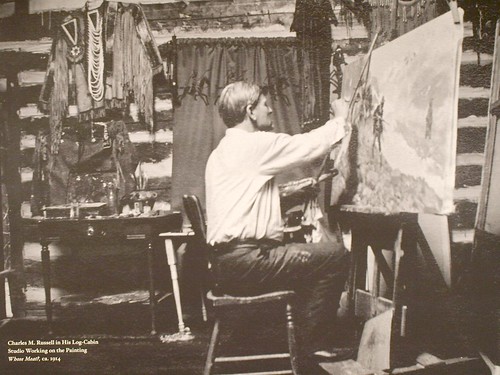
Charles M. Russell (1864–1926). From Amon Carter Museum Fort Worth TX

During those first years in Montana, Russell received great encouragement from Jake Hoover, a mountain man who befriended him and took him under his wing. Hoover often shared his cabin with the young Charlie, sometimes providing food and shelter for months at a time. This friendship allowed Russell to experience the ways of the frontier life he would later portray so vividly in his paintings. 

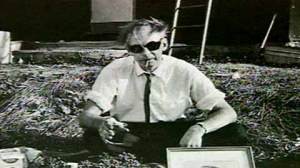
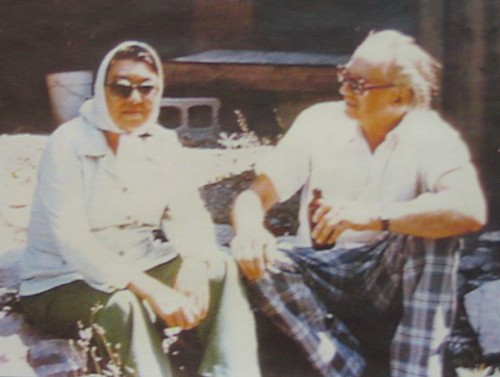
1910  Charles M. Russell and Nancy C. Russell on the porch at Bull Head Lodge, Lake McDonald, Montana

In 1882 Charlie landed a job as a wrangler on a cattle drive. He wrangled for eleven years, and while he was not known for being a good roper or rider, Russell established a local reputation as the affable (some said bone lazy) cowboy who loved to draw and knew how to tell a great story. As a self-taught artist, his sketches were crude but reflected an observant eye, a feel for animal and human anatomy, a sense of humor and a flair for portraying action - all hallmarks of Russell's mature art. 

Throughout his years on the range, he witnessed the changing of the West. He saw the bitter winter of 1886-87 end the cattleman's dominion on the northern plains. The days of free grass and unfenced range were ending and, for Russell, the cowboy life was over by 1893. 

Prior to Russell's marriage to Nancy Cooper, in 1896, only a few of his works had been reproduced nationally. Although he was unsure of his ability to earn a living with his art, Nancy Russell recognized her husband's talent and promise, and provided the business sense and drive that eventually made her unambitious husband one of America's most popular artists. Success did not come easily for the Russells. Montana offered few opportunities for art sales, which eventually led them to New York where contact was established with other artists interested in Western themes. At the very time Frederic Remington was getting out of illustration to concentrate on painting, Russell secured illustrating assignments and began to gain exposure through exhibitions and press coverage. His emergence in the big time art world came in 1911 with a one man show at a New York gallery, followed three years later by an exhibition in London. 

1912 Charles M. Russell at the Jake Hoover cabin in Pig Eye Basin, Little Belt Mountains, Montana. 

Charles Russell felt deeply the passing of the West, the most evident theme of his art. This sense of loss touched him with an emotional immediacy. He was haunted by youthful fantasies, memories of what once was and by the evidence of change that surrounded him as an everyday reality. His work reflected the public demand for authenticity, but also the soul of a romantic.
Source: Adapted from Brian Dippie, Remington & Russell: The Sid Richardson Collection. Austin: University of Texas Press, 1994. (http://www.sidrichardsonmuseum.org/nu_site/sid_richardson_museum.php/museum/russell)
RUSSELL COUNTRY


Charles M. Russell arrived in the Montana territory in 1880, at the age of 16. He may have felt he was then in virgin land; but this was not entirely so. The first white men to set foot in the territory were the Verendrye brothers. They were French fur trappers who, in 1742, ventured as far west as the Yellowstone River. It was not until 62 years later that the Lewis and Clark expedition passed through the same territory on the way west and on the way back to St. Louis.
Through most of the first half of the 1800s, Montana was inhabited by Indians, including Sioux, Crow, Cheyenne, Assinboine, Blackfeet, Flathead, Nez Pierce, Pend d'Oreille, Kootenai, and Gros Ventres. Each tribe had their own homeland and hunting grounds. In the 50 years following Lewis and Clark, whites were very cautious about entering this unquestioned Indian domain. A few trappers and fur traders cautiously worked and tracked on the banks of the Missouri, the Yellowstone, and their tributaries; but they did so at the mercy of their Indian hosts. They were simply making a dangerous foray into a harsh but beautiful and bountiful country.
It was gold that finally turned Montana white. Gold was found there as early as 1850. Thereafter, a series of gold strikes gave rise to boom towns along creeks in the mountainous western portion of the territory. Alder Gulch became Virginia City. Last Chance Gulch later became Helena (the current capitol of Montana). Congress recognized Montana as a territory in 1864, the year of Charlie Russell's birth.

Probably lured by Montana gold, my late husband's grandfather, Caleb Duncan, and his brother George immigrated to Montana from New Brunswick, Canada in the early 1880s. Their names are recorded in the 1880 Montana census of Virginia City. Family accounts indicated they later settled in the Judith Basin area near Lewistown. The poem SHANEY RIDGE is based on an actual incident that marred their lives. At about the same time, Charlie Russell was living with a mountain man named Jake Hoover. He was a trapper, hunter and prospector. Hoover was a man of action and skin hunter who sold meat, among other things, to the ranchers who lived along the Judith River. Hoover by 1880 had built a cabin in the Pig-Eye Basin, where the Judith River leaves the Little Belt Mountains. Russell lived with Hoover for about two years; and when he was not working or exploring the country about him, he was painting. Russell later worked as nighthawk and horse wrangler with a Judith Basin outfit. Caleb Duncan knew Charlie Russell. 
(http://charlierussell.org/russellcountry.htm)
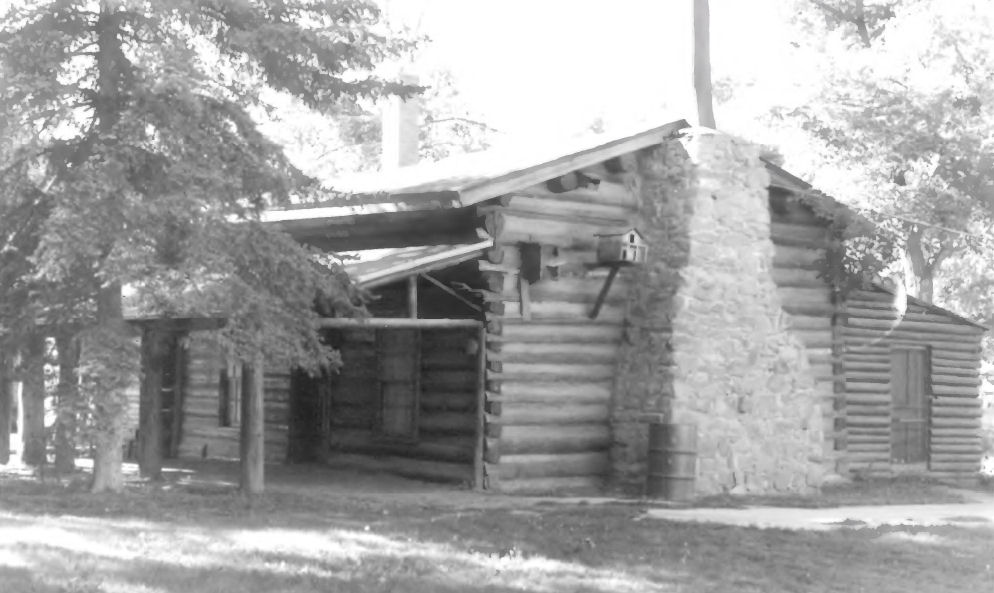


File:Charles M Russell Log Cabin Studio - Great Falls Montana - September 1976.jpg
Original 1903 log cabin studio of artist Charles Marion Russell, located in Great Falls, Montana, in the United States. The log cabin studio is in its original location, and is currently part of the C. M. Russell Museum Complex.


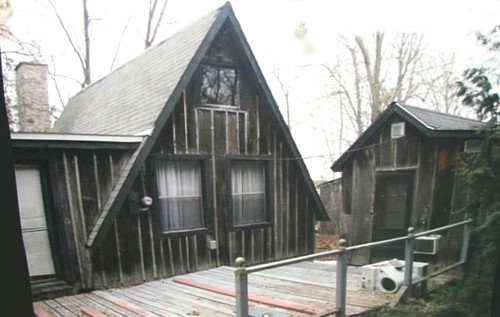
1915 General view of the cabins and gazebo at Bull Head Lodge, Lake McDonald, Montana

1920 Charles M. Russell, Nancy C. Russell, Josephine Trigg, and an unidentified woman on the porch at Bull Head Lodge, Lake McDonald, Montana. 

1903 Interior view of Charles M. Russell’s newly-completed log cabin studio in Great Falls, Montana.
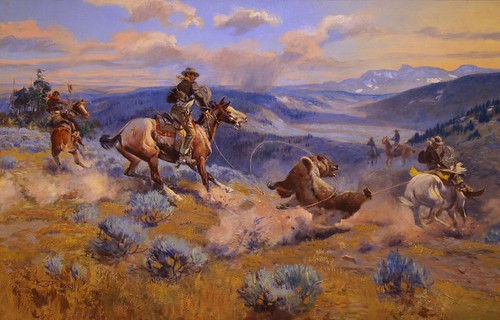
Charles M. Russell (1864–1926), Loops and Swift Horses are Surer than Lead, 1916.
From The Kimball and Amon Carter Museums Fort Worth TX 
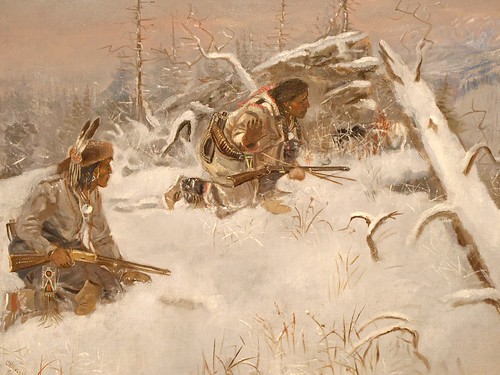
Charles M. Russell (1864–1926), Crow Indians Hunting Elk, ca.,1890
Crow Indians Hunting Elk, 1890

http://charlierussell.org/russellcountry.htm
http://www.hamilton1883.com/blog/2010/06/17/meats-not-meat/
http://www.cartermuseum.org/remington-and-russell/timeline?artist=1400&narrative=1523
http://en.wikipedia.org/wiki/File:Charles_M_Russell_Log_Cabin_Studio_-_Great_Falls_Montana_-_September_1976.jpg

"Haz lo que nadie haría por tí" (Henry David Thoreau)


Haz algo más de ese trabajo que a veces has confesado que era bueno y que sabes que la sociedad y tu juez más severo exigen justamente de ti. Haz lo que te reprobarías no hacer. Sabes que no estás satisfecho ni insatisfecho contigo mismo sin razón. Déjame decirte, y decírmelo a mí mismo al mismo tiempo: cultiva el árbol que has encontrado con fruto en nuestro suelo. No tengas en cuenta los éxitos y fracasos del pasado; todo el pasado es un fracaso y un éxito; es un éxito si nos concede esta oportunidad. ¿No tienes un hermoso don, la facultad de pensar, más valiosa que el más precioso de los relojes de oro? ¿No puedes emitir tu juicio, ya no se remonta la corriente hasta su manantial en ti? Vete al diablo y vuelve. Dispón del mal. Sé castigado de una vez por todas. Muere si puedes. Márchate. Cambia tu salvación por un vaso de agua. Corre el riesgo, si sabes de alguno. Si no, disfruta de la seguridad. No te molestes en ser religioso: nadie te dará las gracias por ello. Si puedes clavar un clavo, y tienes clavos que clavar, hazlo. Es el momento de hacer experimentos, pruébalo. No albergues dudas si no son agradables para ti. Mándalas a la taberna. No comas si no tienes hambre; no hay necesidad de ello. No leas los periódicos. Aprovecha todas las oportunidades que tengas para estar melancólico: sé tan melancólico como puedas y advierte el resultado. Regocíjate con el destino. En cuanto a la salud, tente por bueno y ocúpate de tus asuntos. ¿Quién sabe si ya estás muerto? No te detengas por temor: vendrán cosas más terribles y no dejarán de hacerlo. Los hombres mueren de miedo y viven de la confianza. No seas obediente como los vegetales. Sé tu propia ayuda, tu propio Ebenezer. "De la desobediencia y el fruto", etcétera. No te dediques a encontrar las cosas como crees que son. Haz lo que nadie haría por ti. No hagas nada más.


(Henry David Thoreau, Escribir (Una antología), Pre-Textos, Valencia, 2007.)
Publicado por decocinema (http://anacrespodeluna.blogspot.com/2010_08_03_archive.html)

sábado, 21 de enero de 2012

La cabaña de Gilean Douglas, su lugar protegido


Nature is prodigal, but never wasteful. Even the most bizarre of her experiments have meaning and her endings are always beginnings.
—Gilean Douglas, The Protected Place (1979) 


Gilean Douglas, 1900-1993


Gilean Douglas was born on Feb. 1, 1900, into a wealthy & socially prominent Toronto family. Her childhood was one of privilege, but when she was orphaned at the age of 16 she began to turn away from her inherited lifestyle and the expectations of the class she was born to. She marred in 1922, and her husband assumed her last name. They set off on an adventurous automobile trip through the States , which Douglas recorded in a journal and photographs. In 1924 Douglas' health collapsed from the effects of an overactive thyroid, a condition that plagued her for much of her life. After seven months in hospital she separated from her first husband and returned to Toronto in 1925.This was her home base for the next 15 years. The rest of the 1920s and the 1930s held two more marriages, much travel, and continuing work as a photo-journalist, with work published under several different pseudonyms. 

Douglas began to build a reputation as a poet during this time:
The year 1939 marked a turning point in Gilean Douglas' life. She moved from the east to the west coast ; from the city to the country. For the next seven years, her home base was a small cabin in an isolated mountain valley. Although she continued to travel and work as a journalist, her life centered around the cabin and the surrounding environment. Much of her later work is built upon the themes of silence and solitude, which form the foundation for her identity as a person and as a writer. 

The writings recording Douglas' life in the mountains were published under the pseudonym Grant Madison because of disbelief that a woman could have lived the life described. "Grant Madison " developed a devoted following of fans, and Douglas carried on several long correspondences in his name. (She also used this name for some of her feminist articles .) River For My Sidewalk and Silence Is My Homeland document this period of her life . 

In 1947 Douglas' cabin was destroyed by fire and two years later she moved to a 138 acre waterfront property on Cortes Island with her fourth husband. Her marriage ended in 1953 but she remained there for the rest of her long life. Her home at Channel Rock was isolated, with no road access and no electricity. She had a large garden, and supplemented her writing income by selling produce and plants . 

Starting in the 1960s, Douglas' writing centred increasingly on her life at Channel Rock . She wrote a regular column, "Nature Rambles", for the Victoria Times Colonist from 1961 to 1992, the year before her death. The Protected Place is based on these columns . 

During her years on Cortes, Douglas was active in community affairs . She held local, district, provincial and national office in the Women's Institute, edited a book on its history, and was awarded a Life Membership in 1989. She belonged to the Women's Auxiliary of the Anglican Church and gave the address on the World Day of Prayer for 22 years . Douglas was a member of the first Cortes Advisory Planning Commission and represented Cortes on the Regional Board from 1968 until 1977 .She played an important role in framing the regulatory bylaws designed to guide the development brought about by increased population growth . She was also a Weather Observer for Environment Canada for 33 years. 

Gilean Douglas died on Cortes Island on October 31st, 1993.


Douglas, Gilean
Gilean Douglas (christened Gillian Joan Coldham Douglas) was born in Toronto, Ont. In 1900. Orphaned at the age of 16, she began to work as a free-lance writer and photographer. Over her lifetime her work appeared in more than 200 publications, often published under pseudonyms (Grant Madison, Armoral Kent and Jill MacLean). Douglas published eight books of poetry and three books of non-fiction, and, from 1961 to 1992, wrote a regular column, "Nature Rambles", for the Victoria Colonist (later Times-Colonist). In 1939, following the collapse of her third marriage, Douglas moved from Ontario to an isolated cabin in the mountains near Hope, B.C. Her first two books of nature writing (one published under the name Grant Madison) document her life there. Her cabin was destroyed by fire in 1947 and two years later she moved to a 138-acre waterfront homestead on Cortes Island with her fourth husband, Philip Douglas, (ne Major). Her marriage ended in 1953 but she remained there until her death in 1993. Her home, Channel Rock, had no road access and no electricity. (...)

Narratives of Coming Home: Gilean Douglas and Nature Writing 
by Andrea Lebowitz
(...)

III
The Search for Place

Douglas always managed to take and make a life of her own, but finding home and community came more slowly and with greater difficulty, since a sense of betrayal and the perceived inadequacies of her guardians and loved ones was always with her. However, the turning point into a life of self-content and confidence came during the late ‘thirties and ‘forties. These were the crucial years of living in the Cascade Mountains not far (as the crow flies) from Kamloops, B.C.. 

She purchased a miner’s cabin and lived for almost a decade in the valley of the Teal and Wren Rivers and Evergreen and Cougar Mountains. An initial year of coming to terms with isolation and solitude changed intimidation into release, and she settled into the pattern that would shape the rest of her life: working the land for survival, observing and immersing herself into the natural world and writing: 

I remember when I first came here. The mountains made me feel so small and when the night fell, the forests seemed to threaten me with their greater darkness….Here was I, one little human being in all this immensity…(who had been) always surrounded by people and with cities everywhere. So now all this, to live in for my lifetime if all went well, seemed more than I could bear. I did not realize that I was like a starving man who has suddenly been given more food than his stomach can tolerate….First I must cleanse myself, then I must renew. Then, and not until then could I look my mountains calmly in the face and know that the kingdom of heaven was indeed within me—if I would only let it be. (Silence 68-9) 

Her initial sense of threat and foreboding derived not so much from the immensity of nature as from the failure and frailty of the human person within it. Having shifted her focus from the world’s demands to her own inner strengths and desires, Douglas came to a profound experience of peace and contentment in nature and an unending delight in mountains: 

If we still praise tall mountains and the sky
it is because there is need to know
that, in the darkly sanguine ebb and flow
with reason lashed upon the spar of why,
here is serenity: men war and die,
yet peace remains. The frail years come and go,
but here is calm and certainty that no
mad mouth of greed can shame or terrify
("Nature Poets in Now," Prodigal 17). 

Her achievement of a sense of serenity and fulfilment was directly dependent on nature which was also the source of her moral certainty. For Douglas, this perception of nature as the ground of her existence never wavered. 

While there were other wilderness dwellers within walking distance and visitors and friends sought her out, her experience was marked by a profound solitude shared most closely by and with wild animals: 

I have seen the eyes of the lynx then, too, following me at some distance in the underbrush as I moved along the trail. He seems to have quite a fondness for such sleuthing, so I judge him to be a rather curious fellow and perhaps not averse to a bit of human companionship….But if the mountain lion cares for two-footed companionship he has not announced it to me….Once I came face to face with him as I rounded a ledge of rock, and he reminded me of nothing so much as the Cheshire cat. One moment he was there and the next he had dissolved silently into the landscape while the impression of him seemed to linger on the mountain air. But he did not smile. (Silence 114) 

During these years in the Cascade Mountains, Douglas grew or made most of the necessities of life and augmented her income with the proceeds of her writing. While she published poems and articles in many places, her major books were still a decade in the future. (...)
(http://www.canadianpoetry.ca/cpjrn/vol42/lebowitz.htm)

Gilean Douglas' cabin. 40 years of homesteading feminist conservationist canadian writing


http://www.douglashistory.co.uk/history/gileandouglas.htm
http://www.abcbookworld.com/view_author.php?id=9515
http://www.canadianpoetry.ca/cpjrn/vol42/lebowitz.htm
http://memorybc.ca/gilean-douglas-fonds-2;rad

viernes, 20 de enero de 2012

Sigurd Olson, la cabaña, la canoa y la madre tierra


Sigurd F. Olson sentado delante de su cabaña. 
foto: Alfred Eisenstaedt

"La dicha se encuentra en lo más sencillo y natural; la bruma sobre la pradera; la luz del sol reflejada en las hojas; la estela de la luna reflejada en el agua. Incluso la lluvia, el viento y las nubes de tormenta son motivo de alegría". 
Sigurd F. Olson (1899-1982) escritor y naturalista.

Sigurd Olson at his cabin "Listening Point", ca. 1981 WHi 74072

We are at last beginning to understand what is at stake. It is more than wilderness, beauty and peace of mind: It is nothing less than the survival of man and his culture. We know now that unless we choose wisely in the decades ahead, the fragile web of life could become the web of death.
- Sigurd. F. Olson -


Sigurd F. Olson (1899-1982)

Sigurd F. Olson, one of America's most beloved nature writers and most influential conservationists of the 20th century. Best known as the author of The Singing Wilderness and eight other books, Olson also played an important role in the preservation of a number of national parks, seashores, and wilderness areas.

Sigurd Olson's Cabin
Sigurd Olson’s Listening Point retreat on Burntside Lake.
    
Sigurd Olson created Listening Point in 1956 as a private retreat. It became widely known and celebrated after Alfred Knopf published Olson's book, "Listening Point" in 1958.

(...) A little log cabin on the eastern shore of Burntside Lake, built by one of Minnesota's most famous writers, is the state's newest addition to the National Register of Historic Places.
Listening Point, the one-room structure near Ely that author and activist Sigurd Olson and his family put up in the 1950s, cannot be seen from the lake and is not easy to spot from the nearest road, either. Olson wouldn't have it any other way. The site includes the surrounding 27 acres.
He penned nine books, including a 1958 title called "Listening Point," but it is a common misperception that the cabin was his writing shack. He never wrote at the cabin – he was too busy fishing, hiking, canoeing and  thinking. (...)

"The Shack"
[photo of Olson's writing shack]
Sigurd Olson wrote his books in a converted single-car garage that he called "the shack." Throughout the 1930s he had longed for a quiet place to write, away from the noise of children and telephones, and in September 1937 he spent $150 to renovate the garage.


"Now it will make no difference how many are in the house, what company we have or how many guests," he wrote in his journal. "Nothing will bother me out here."


Well, it wasn't quite as simple as Sigurd expected, but over the years he found he could do his best writing here.

(...)Sigurd Olson, in his spare time, ghosted part of the National Wilderness Act, always fighting to preserve and protect his love, the Boundary Waters Canoe Area — on this typewriter.
It’s just a small shack, really an old garage — a drab olive green with a pair of windows on each side, tucked under a few shade trees in the corner of the yard.
When you enter, you hear the spring of a weathered, wooden screen door, and the slap when it closes behind.
Inside, it’s mustiness and old pine. The faded Royal typewriter still waits on a broad oak desk. Olson’s pipes are in the shallow bowl to the right.

Sigurd Olson at Quetico
 From this typewriter, and this shack, Sigurd Olson captured in words the spirit of wilderness. Olson’s poetic writing has been compared to Henry David Thoreau’s, or John Muir’s. Chuck Wick owns the shack now.
“There’s all kinds of stuff here,” Wick says, fumbling a metal axe head pulled from a wooden drawer. “This piece here — this is an interesting one here. This is a trader’s axe that’s back from the voyageurs era.”
As he worked in his shack, Olson worried that 20th century America was fast gobbling up the nation’s last wild places.(...)

Sigurd Olson's final words left in his typewriter. Photo courtesy Tobias W.H. Tan.

"A new adventure is coming up and I'm sure it will be a good one."
Last words Sigurd typed, found in his typewriter after his death on 1982 

Sigurd Olson at Listening Point, ca 1981

A Sense of Place: Sigurd Olson's Listening Point

Sigurd Olson's second book, Listening Point, is named after the property he owned on Burntside Lake, about ten miles away from his home in Ely. He got the idea for naming the property from his daughter-in-law Yvonne, who toured the property for the first time in the spring of 1958. Her husband, Sigurd's son Robert, was a U.S. Foreign Service officer serving in the Middle East. As Sigurd showed Yvonne the point and described what it meant to him, she noticed a similarity with the way the diplomatic community described Benghazi, Libya. They called it a "listening post," from which they could stay connected with the ebb and flow of life along the entire north coast of Africa. She said the way he described his point made it sound like a listening post for the wilderness. From then on Sigurd called his special place Listening Point. His book by that name, published later that same year, begins with a wonderful description that captures the depth of meaning and connectedness associated with a well-developed sense of place:
Listening Point is a bare glaciated spit of rock in the Quetico-Superior country. Each time I have gone there I have found something new which has opened up great realms of thought and interest. For me it has been a point of discovery and, like all such places of departure, has assumed meaning far beyond the ordinary.

From it I have seen the immensity of space and glimpsed at times the grandeur of creation. There I have sensed the span of uncounted centuries and looked down the path all life has come. I have explored on this rocky bit of shore the great concept that nothing stands alone and everything, no matter how small, is part of a greater whole. The point has shown me time and again that William Blake was right when he wrote: To see the world in a grain of sand, / And a heaven in a wild flower; / Hold infinity in the palm of your hand, / And eternity in an hour. I believe that what I have known there is one of the oldest satisfactions of man, that when he gazed upon the earth and sky with wonder, when he sensed the first vague glimmerings of meaning in the universe, the world of knowledge and spirit was opened to him. While we are born with curiosity and wonder and our early years full of the adventure they bring, I know such inherent joys are often lost. I also know that, being deep within us, their latent glow can be fanned to flame again by awareness and an open mind. 
Listening Point is dedicated to recapturing this almost forgotten sense of wonder and learning from rocks and trees and all the life that is found there, truths that can encompass all. Through a vein of rose quartz at its tip can be read the geological history of the planet, from an old pine stump the ecological succession of the plant kingdom, from an Indian legend the story of the dreams of all mankind 
(http://new-wood.blogspot.com/2011/01/sense-of-place-sigurd-olsons-listening.html)
"The way of a canoe is the way of the wilderness, and of a freedom almost forgotten," wrote Sigurd Olson. 
(MPR Photo/Bob Kelleher)

"The movement of a canoe is like a reed in the wind. Silence is part of it, and the sounds of lapping water, bird songs, and wind in the trees. It is part of the medium through which it floats, the sky, the water, the shores....There is magic in the feel of a paddle and the movement of a canoe, a magic compounded of distance, adventure, solitude, and peace. The way of a canoe is the way of the wilderness, and of a freedom almost forgotten. It is an antidote to insecurity, the open door to waterways of ages past and a way of life with profound and abiding satisfactions. When a man is part of his canoe, he is part of all that canoes have ever known."
The Singing Wilderness (1956)


SIGURD F. OLSON 
by DAVID BACKES, biographer

Sigurd F. Olson was one of America’s most beloved nature writers and most influential conservationists of the 20th century. Best known as the author of “The Singing Wilderness” and eight other books, Olson also played an important role in the preservation of a number of national parks, seashores, and wilderness areas.
As an author and speaker, Olson was unsurpassed in capturing the sense of awe and wonder and connectedness that close contact with nature can bring to people. Beyond that, his ideas about the meaning of wilderness had a power and uniqueness that are not only relevant in the twenty-first century, but needed. The biological underpinning to his philosophy comes from a theory he developed and called “racial memory”–the idea that humans have a biological attachment to nature that arises from our long evolutionary heritage. This theory, which has ties to the romantics and primitivists and to the “collective unconscious” described by psychologist Carl Jung, did not receive much scholarly attention or support during his lifetime, but in recent years it has become the cornerstone of the emerging scholarly discipline of evolutionary psychology.
Olson incorporated the theory of racial memory with a spiritual perspective steeped in evolutionary humanism–the idea (promoted by Aldous and Julian Huxley, Lewis Mumford, and Pierre Teilhard de Chardin, among others) that evolution is proceeding along a spiritual path toward union with God. Olson agreed with the basic arguments of Robert Marshall, Aldo Leopold, and other leading wilderness activists of his generation, but his “land aesthetic” (what makes a place beautiful and gives it meaning) went farther than that of Leopold’s by incorporating humans as part of, not separate from, the land, and this perspective informed his unique wilderness philosophy that ultimately became a theology. To Olson, because visitors to a wilderness area experience a high degree of silence and solitude amid noncivilized surroundings, they can easily reconnect to their evolutionary heritage as humans, and by sensing the grandeur of the eternal mystery of creation and their own participation in this mystery–their own connectedness to all things–they will come to sense the sacredness of all creation. If, as Olson believed, evolution is proceeding toward union with God, and if, as he also believed, individual spiritual growth plays an essential role in this evolutionary process, then a wilderness experience can be considered a sacramental experience, of benefit not just to the individual or to humanity at large but to all of creation.
Olson was a tremendously inspiring writer and speaker, and yet he also played a vital role as a wilderness activist. From 1948 until his death in 1982, he was the wilderness ecologist for the Izaak Walton League of America. In the 1950s he was vice president and then president of the National Parks Association, and built friendships and influence within the National Park Service and the Department of the Interior, leading to a number of years of service as an advisor to the interior secretary and park service director. During the Kennedy and Johnson administrations, Olson helped scout out, advocate and present plans for preserving a number of national park system lands, from Cape Cod in the East, to Padre Island in the South, Point Reyes in the West, and Voyageurs National Park in the North. He was a vital member of the Alaska Task Force team whose research and work in the 1960s ultimately bore fruition in the Alaska Lands Act of 1980, the largest single act of wilderness preservation in the history of the world. Olson also was influential in Canada, especially in his efforts to protect the Quetico-Superior wilderness of Ontario and Minnesota, and in his efforts to protect the portions of the Yukon adjoining preserved areas in arctic Alaska. Finally, from 1956 until the late 1970s, Olson was active in governing the Wilderness Society. As vice president and president of the organization from 1963-1971, he helped modernize the group’s approach in an age of public relations and litigation.
One measure of his importance and uniqueness is this: Sigurd Olson is the only person to have received the highest honors of four leading citizen organizations that focus on the nation’s public lands: the Izaak Walton League, the National Wildlife Federation, the Sierra Club, and the Wilderness Society. That accomplishment is even more extraordinary in light of the fact that he also received the John Burroughs Medal, the highest honor in nature writing. Of the dozens of winners of the medal since it was first awarded in 1926, only a handful have played major leadership roles in national conservation organizations; only two others (Aldo Leopold and Paul Brooks) had received even one of the major conservation group awards by the time I completed Olson’s biography in 1997.
At the same time, to focus too closely on the question of his originality or influence, as scholars tend to do, is to miss a key point. A theology or a philosophy is worthless if it cannot be expressed in a way that touches people’s hearts. Olson wanted to bring his message of wilderness salvation to people who would never think of reading Teilhard de Chardin or Lewis Mumford or even a more popular but still intellectual writer such as Loren Eiseley. In August 1960, for example, he said in a note to himself, “I must bridge the gap between Eiseley and my audience of common people, the non-intellectuals…who feel deeply but are groping for ideas.” And he found tremendous success. His collected papers at the Minnesota Historical Society are full of letters from men and women who said they had finally found someone who had put into words the feelings they had experienced in the outdoors, either in their backyards or in the wilderness. Olson’s special gift was his ability to express his deep message about the spiritual values of nature by writing about simple things–the sound of wings over a marsh, the smell of a bog, the memories stirred by a campfire, the movement of a canoe–in a way that captured the emotions they stirred. Sigurd Olson may not have become the Baptist missionary his father once hoped for, but a missionary he was, a wilderness evangelist with legions of followers. He was an apostle of awe, a witness for wonder, and an icon of the modern wilderness movement whose words will continue to stir hearts and souls for generations to come.
(http://singingwilderness.net/wordpress/sigurd-f-olson/)


Galería fotográfica de la cabaña de Sigurd Olson:
The Cabin
Sigurd Olson's Cabin
Resting Bench on the side of the cabin
Inside Sigurd Olson's Cabin
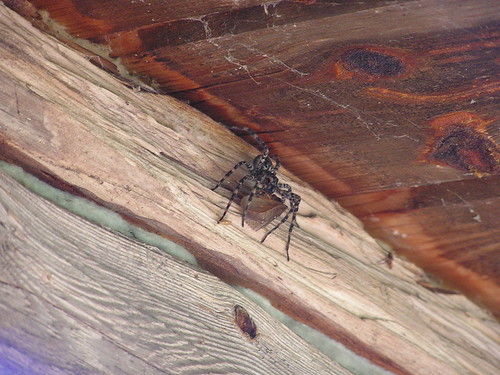
Wolf Spider


Video excerpt from The Wilderness World of Sigurd F. Olson:


http://timpanogos.wordpress.com/2011/01/11/typewriter-of-the-moment-sigurd-olson-a-typewriter-in-the-wilderness/
http://www.minnpost.com/markneuzil/2008/05/12/1812/sigurd_olsons_cabin_is_officially_historic
http://minnesota.publicradio.org/display/web/2006/06/01/sigolsonanniversary/
http://www.northland.edu/sigurd-olson-environmental-institute-overview.htm
http://www.dnr.state.mn.us/volunteer/novdec11/listening_post.html
http://www4.uwm.edu/letsci/research/sigurd_olson/contents.htm
http://www.listeningpointfoundation.org/

jueves, 19 de enero de 2012

La cabaña de Al Purdy, un pequeño susurro en el bosque cerca del lago


Poet Al Purdy built a cabin in Prince Edward County, Ont., where he composed some of his greatest work. - Poet Al Purdy built a cabin in Prince Edward County, Ont., where he composed some of his greatest work. | Dennis Robinson/The Globe and Mail
Poet Al Purdy built a cabin in Prince Edward County, Ont., where he composed some of his greatest work.
Canadian poet AL PURDY wrote most of his best work in a small, self-built A-frame cabin tucked along the shore of Roblin Lake in Prince Edward County. He called this little corner of Ontario's Prince Edward County his 'tangential backyard universe.'
When Purdy died in 2000, he was hailed as one of the greatest Canadian poets of the last century. He had written more than 40 books, won a trophy case of awards, circled the globe. In May, a larger-than-life bronze statue of him was erected in Toronto.
Despite the caviar receptions and gold accolades, he always returned to this jury-rigged little A-frame tacked to a low-slung, leaning bungalow. The whole edifice, he observed, 'bent a little in the wind and dreamt of the trees it came from.' 

"On a green island in Ontario/
I learned about being human/
Built a house and found the woman/
and we shall be there forever/
building a house that is never finished.”

Eurithe Purdy, his widow who lives in Sidney BC, has put the house up for sale and is hoping that the group FRIENDS OF AL PURDY will save it as a writing retreat for budding Canadian authors.

Al Purdy and Margaret Laurence
Al Purdy and Margaret Laurence were close friends, discussing their writing in letters which were published as A FRIENDSHIP IN LETTERS.
The A-frame house, made out of second-hand lumber and original poetry, became the most famous writer's house in the country. Hundreds of writers found their way to Roblin Lake in Ameliasburg to visit the Purdys and talk about poetry and history while downing beer or wild grape wine. A lot of poetry and prose came out of that hard-to-find place.

La cabaña de Edward Hopper, el pintor del silencio


Edward Hopper. Truro, MA, 1960. Arnold Newman

 Edward Hopper built a summer house in Truro in 1934. 
Chris Ramirez for The New York Times.


Edward Hopper Portrait
Edward Hopper
Peter A. Juley & Son Collection, Smithsonian American Art Museum J0001707. 
Edward Hopper (Nyack, 1882-1967), pintor realista que retrató el aislamiento, la soledad y la melancolía del siglo XX norteamericano. Permaneció al margen de las experimentaciones cubistas de franceses y españoles, pero fue influido por Velázquez, Goya, Daumier y Manet, cuya obra había conocido a través de sus profesores. La mayoría de sus obras tienen como escenario el estado de Nueva York o Nueva Inglaterra: calles desiertas, teatros medio vacíos, estaciones de gasolina, vías de ferrocarril. Aunque su obra se mantuvo al margen de las principales corrientes abstractas del siglo XX, su estilo simple y esquemático fue uno de los que influyó en la vuelta al arte figurativo posterior y en el Pop Art.

Edward Hopper


Cape Cod, in Edward Hopper’s Light
Edward Hopper built a summer house in Truro in 1934.
At that moment, the sandy rise is no longer simply Corn Hill, the site of the Mayflower Pilgrims’ first encounter with the fruits of indigenous agriculture, but it is “Corn Hill,” Edward Hopper’s iconic 1930 oil painting.
Hopper spent nearly 40 of his 84 summers in Truro, the rolling, lightly populated stretch of the Cape between Provincetown and Wellfleet. Together, these three communities comprise the Outer Cape: lands that, while connected to the mainland, have long served as a haven for those seeking something different. The Pilgrims, who landed there in 1620, gave way to 19th-century whalers, and then to the artists, writers and freethinkers who began spending summers there nearly a century ago.
Edward Hopper first visited the Cape in 1930. In 1934, he and his wife, Josephine, built a modest summer house — a classic Cape, but for a huge north-facing window. On a sand bluff, the house overlooks nothing but bearberry, broom crowberry, dune grass and an empty stretch of Fisher Beach. Over the decades, as his work developed, Hopper returned each year to this simplicity: old wooden houses in an open landscape of beach, heath and woodlot. (...) (Chris Ramirez for The New York Times)
 (http://travel.nytimes.com/2008/08/10/travel/10cultured.html?pagewanted=2)


Edward Hopper (1882-1967) was a solitary man at home by the sea, amid the sand, dune grass and low-lying shrubs. He and his fellow artist wife Josephine Nivison (1883-1968) lived frugally in a New York City walk-up apartment...

Edward Hopper en Cape Cod

(...) another fugitive from the city who built a house on the dunes to the north of the Outermost House, was the painter Edward Hopper. He and his fellow-artist wife Josephine Nivison built their summer studio house in South Truro in 1934. ‘It’s just a summer cottage, as primitive as the land it’s in’, Josephine wrote.
Edward and Jo Hopper at Cape Elizabeth 1927
Collection of Rev. Arthayer Sanborn. Photograph by Soichi Sunami.
An Edward Hopper Scrapbook
Hopper spent nearly 40 of his 84 summers in Truro and the paintings he did there, especially from the 1930s, mark an important stage in his work: isolated buildings in broad vistas are meditations on form and colour that steer toward the abstract while remaining figurative.
Like the bare, open land that once was here, Hopper’s Cape works are unadorned. Luminous liquid light bathes simple shapes…Hopper painted structures: rough-hewn barns and hen coops, pitched-roof saltboxes,churches, Truro’s lighthouse, a tiny train station, and fishermen’s shacks on dunes. In ‘Cape Cod Evening’ (1939) a couple seems unaware of each other; only their collie is alert, as Hopper noted, ‘listening to a whippoorwill or some evening sound’. And there are Hopper’s nautical paintings — young shirtless lads in the streamlined beauty of sloops, white sails, brilliant blue sea.
Seen from the beach below, ‘House on Dune Edge’ (1930) looms against a small sky; bright sunlight hits the curved facade, but one is drawn to the mysterious, deep shadows on the porch… Hopper’s paintings of Cape roads, such as ‘Road and Trees’ (1962), ‘Route 6, Eastham’ (1941) and ‘Gas’ (1940), inspired film motifs and particularly director Wim Wenders, who said, “The paintings of Edward Hopper are always the beginnings of a story.”
Hopper liked to work alone. He painted at the same time of day to capture similar light. ..On the Cape he found movement and drama in the interplay of solitude, architecture and light. And 
something more: His paintings are infused with a traveller’s yearning to discover what’s around the bend – what’s going to happen next? The storytelling. “If you could say it in words,” he said, “there would be no reason to paint.”
EDWARD Y JO PINTANDO EN SU ESTUDIO EN 1964
Truro Cape Cod
Corn Hill (1930), de Edward Hopper, McNay Art Museum, San Antonio, Texas
Edward Hopper: Hills, South Turro 1934

Here’s a small gallery of Edward Hopper’s paintings:

UNA MUJER AL SOL 1961
MAÑANA EN CAPE COP 1954
HABITACION DE HOTEL 1931

SUNDAY 1926


http://www.zimbio.com/member/CompletelyCoastal/articles/UccM8JjJiRr/Edward+Hopper+Cape+Cod+Cottages+Houses+Thenhttp://philipkochpaintings.blogspot.com/2011/01/for-all-edward-hopper-maniacs-out-there.html
http://www.completely-coastal.com/2009/08/edward-hoppers-cape-cod-cottages-and.html
http://lumieregallery.net/exhibitions_wp/Newman_Achievement_h/index_3.html
http://tallerdeencuentros.blogspot.com/2010_08_01_archive.html
http://travel.nytimes.com/2008/08/10/travel/10cultured.html
http://www.arquitrave.com/galeria/galeria_hopper.html#
http://nathalieferrier.com/?page_id=8
http://www.edwardhopper.info/