El tema central de este Blog es LA FILOSOFÍA DE LA CABAÑA y/o EL REGRESO A LA NATURALEZA o sobre la construcción de un "paradiso perduto" y encontrar un lugar en él. La experiencia de la quietud silenciosa en la contemplación y la conexión entre el corazón y la tierra. La cabaña como objeto y método de pensamiento. Una cabaña para aprender a vivir de nuevo, y como ejemplo de que otras maneras de vivir son posibles sobre la tierra.

lunes, 1 de julio de 2013

Gimme Shelter! (¡Dame refugio!)

Gimme Shelter!


When you put aside the technical jargon and academic approach, all architecture really is, is the art of creating shelter. As American architect Philip Johnston once wrote, "All architecture is shelter, all great architecture is the design of space that contains, cuddles, exalts, or stimulates the persons in that space." Or, as Mick Jagger put it, "If I don't get some shelter, I think i'm gonna fade away."


Shelters can be found in the most improbable of places. Say, the middle of a river.


A shelter can be any shape or size. The design of shelters change based on their environment and the needs of the occupants.


Eco-friendly shelters made out of used shipping containers are big right now. Above you see a shipping container home designed by an artist. It is meant to be easily assembled and disassmebled should the property ever be sold.


Here is another artistic shelter created out of shipping containers. Like the artist's residence above, this one is multi-story. The perpendicular placement serves to create lots of outdoor space. The upper container provides a projecting roof above the entrance as well as serves to shelter the back terrace. The ceiling of the bottom container is also a terrace of the first floor.


Who says container homes can't also be chic? This Chilean home features great modern design and can assembled in less than 90 days. It's completely eco-friendly and looks towards a future of green homes created from recycled materials.


A shelter protects inhabitants from the elements, which of course vary from environment to environment. This round military-style shelter can be assembled quickly and is suitable for use in a number of regions.


Shelters can be found as well as built. Above you see the Kephart Shelter, a cabin at the end of the Kephart Prong trail in the Smoky Mountains where hikers put up their feet after completing the walk.


Here's a prefab eco shelter that can be flown out to the slopes and removed when skiing season is over. 


How about a sea shelter?


A shelter is as unique as the person who takes refuge within its walls. 


It can
be large or small.


Round.


Or square.


Or pointed.


A shelter need not be the shape of a box. It can be a zig-zag as demonstrated by Pedro Reyes' construction above.


These skating shelters by Patkau Architects are shaped specifically to shield skaters from better Canadian winds and placed to resemble a huddled group of people, shielding each other from the bitter chill.


Is this a photo of extra-terrestrials' first contact with humanity? No, it's a pre-fab pod shelter in Mexico with three stories made out of recycled materials by Broissin architects.


A shelter in the Australian Outback looks like a watchtower, but inside is a cozy retreat for outdoorsy Aussies to enjoy the natural beauty of their country. It was designed by Casey Brown Architecture.


Or even a standalone structure. You can make a shelter in your own house.


The interiors of shelters can tell us a lot about their purpose. An eco-refuge that celebrates the environment and promotes health may have a soaking tub and tons of outdoor spaces.


While the interior of a bomb shelter reflects the grim circumstances of its existence and the basic need (read: survival) of its occupants.


A shelter can be anything you need it to be. It is as mutable as time, as changeable as weather.

We all need shelter from the storm. Find yours. 


miércoles, 26 de junio de 2013

Biblioteca y jardín


via Cabin Porn


"Si tienes una biblioteca con jardín, lo tienes todo." 

(Cicerón)


"La idea de remedar el Paraíso se respira en todos los jardines del mundo"
(Aurora Egido)


(...) El jardín es el lugar donde se consuma la reunificación del hombre y las cosas, de la naturaleza y la cultura. La pérdida de esa unidad original es la pérdida del jardín o paraíso, Paradise Lost*, la generación de la muerte, el comienzo de la memoria como forma de supervivencia, la nostalgia de los dioses, el deseo y la promesa de inmortalidad. (...)

(José Ángel Valente en el Elogio del Calígrafo)


*Paradise Lost. Poema de John Milton


lunes, 24 de junio de 2013

domingo, 16 de junio de 2013

CABAÑAS INSUMISAS. LIBERTAD GASEADA. INDIGNACIÓN


¡¡¡YO TAMBIÉN SOY DE ISTANBUL!!!
¡¡¡TODOS SOMOS TURQUÍA!!!

[foto de la noticia]

Ante el despertar de las conciencias 
La belleza y dignidad del pueblo turco en lucha
Un pueblo gaseado
La vejación de un pueblo

RESISTANBUL

'La mujer de rojo', símbolo de las protestas en Istanbul

kimyasal-tayyip

Turkey protests: Istanbul erupts as Gezi Park cleared


CABAÑAS URBANAS DE INSUMISIÓN
(reapropiación de espacios de libertad):
Erdogan da un «último aviso» a los manifestantes
Tiendas de campaña instaladas en el parque Gezi de Istanbul

La policía turca se ensaña con armas químicas contra manifestantes pacíficos:


Take a Breath - Nefes Al English Subtitled Altyazili from Süleyman Demirel on Vimeo.


Leer más: 


sábado, 15 de junio de 2013

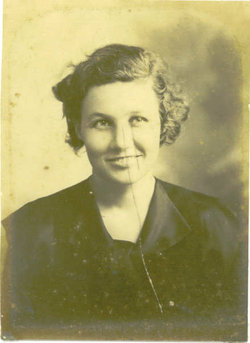
La cabaña de Frances Wisner, pionera autogestionaria y ambientalista de Idaho


Lydia Frances <i>Coyle</i> Wisner
(1913-1986)
Frances Coyle Zaunmiller Wisner
Added by: Alice Brandt


Frances Wisner's cabin at Campbell's Ferry Ranch. Layne Parmenter 


Colección Personajes Idaho del Museo Histórico.
Historical Museum's Idaho Characters Collection


Frances Wisner (1913-1986) arrived in Idaho in 1940. Through a marriage, she lived and worked at Campbell’s Ferry. In 1945 she contacted the editor of the Idaho County Free Press in Grangeville who agreed to give her a weekly column through which she was able to share her daily experiences and observations along the river. She continued to write her column for some 40 years. She used the column to advocate for issues which she believed in, including prohibiting air spotting (hunting from aircraft) and radio-detected hunting as well as promoting the eventual placement of the Campbell’s Ferry Bridge. She was a true pioneer ecologist who composted garden waste, hiked miles of remote trails, protected wildlife, and tread lightly on the soil long before these ideas were popular. Her book, My Mountains, details her life on the Salmon River. The book, Haven in the Wilderness by Carol Furey-Werhan, tells Frances’ life story.


Frances Wisner (1913-1986) llegó a Idaho en 1940. A partir de su matrimonio, vivió y trabajó en Campbells Ferry. En 1945 se puso en contacto con el editor del Idaho County Free Press en Grangeville que accedió a darle una columna semanal a través de la cual compartiría todas sus experiencias y observaciones diarias a lo largo del río. Frances continuó escribiendo su columna durante unos 40 años. Usó dicha columna para hablar de los temas que ella creía, incluyendo la prohibición de caza desde el aire en avioneta y la detección por radar, así como la promoción de la eventual construcción del puente Campbells Ferry. Era una verdadera ecologista y pionera que compostaba los desechos en su jardín, caminó millas de remotos senderos, protegió la fauna, y todo ello mucho antes de que estas ideas fueran populares. Su libro, Mis Montañas, detalla su vida en el río de color salmón. El libro, Haven in the Wilderness  de Carol Furey-Werhan, cuenta la historia de la vida de Frances.


Frances – Frances Zaunmiller Wisner under the bridge that she lobbied to be built, replacing the ferry in 1956.


jueves, 13 de junio de 2013

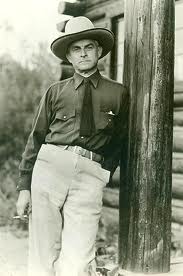
El rancho de Struthers Burt, una versión romántica del vaquero del oeste


(1882-1954) 

Princeton-educated Struthers Burt was a popular writer whose book, The Diary of a Dude Wrangler, inspired a whole new generation of dude ranchers. Burt was originally opposed to the creation of a national park in Jackson Hole. However, by the 1920s, Burt used his power of the pen in national publications to lobby for the protection of the scenic qualities of Jackson Hole. Jackson Hole Historical Society and Museum.

Struthers Burt graduated from Princeton University in 1904. In 1908 he moved to Wyoming and founded the JY Ranch with Louis Joy. This ranch ultimately became the famous Rockefeller Ranch of the same name (the JY). In 1912, following a dispute with Louis Joy, he established the Bar BC Bar B C Ranch, a dude ranch. He met and married his wife, Katherine Newlin Burt an author of Western novels, in the same year. Burt's son, Nathaniel Burt, was also a published writer.[1]
Struthers was one of the people who led ultimately to the establishment of Grand Teton National Park when, in 1923, he met with other like-minded individuals at Maud Noble's cabin and began the process of gathering support to have the area come under protection by the Federal Government.
His papers are housed at Princeton University.


The Diary of a Dude Wrangler 


Published in 1924 and written by Struthers Burt, this book is dedicated to all the dudes, cow-punchers, ranchers and horses the author has met. ( by the way, a cow-puncher is another term for a cowboy!) 

Struthers Burt was a noted writer and rancher that lived in the early twentieth century. He taught writing at Princeton University. His personal papers are located at Princeton University and the collection includes various copies of some of Burt’s own works, correspondence with family and friends from his days at Princeton University, and assorted materials about his family and genealogy. 

The Last paragraph from the book is quite poignant when read in the context of our environment in 2012: 

“I have said that the old West is still there, and so it is, and I have said that in many places it will continue to exist, and that is true, also, but I am afraid for my own country unless some help is given it – some wise direction. It is too beautiful and now too famous. Sometimes I dream of it unhappily. And when my blood sirs in my dreams I think that somewhere the blood of my uncle and my great-grandfather must be stirring, too."


Imagen cortesía de Archivos de la Universidad de Princeton 
(http://findingaids.princeton.edu/collections/C0039) 


Words from the Wild

Cadre of accomplished writers discovered Jackson Hole early on

BY ELIZABETH CLAIR FLOOD

The Bar BC Ranch was established in 1912 by Maxwell Struthers Burt and his fellow Philadelphian, Dr. Horace Carncross.


(page 1 of 5)
About the time Gertrude Stein composed the romantic line “Rose is a rose is a rose is a rose”—and invited Lost Generation writers and artists like Fitzgerald, Hemingway, and Picasso into her chic Parisian salon on 27 rue de Fleurus—another significant literary get-together was taking place far away. This one was much more rustic in style; in some ways, however, just as glamorous, as a sophisticated crowd of artists and writers gathered in Jackson Hole. 

In the early 1900s they came to the valley to hunt, fish, write, and, in some cases, gather information for Saturday Evening Post articles or for their own books about the West. One of the big names was Owen Wister, author of The Virginian, the first true western novel. Wister stayed at the valley’s earliest dude ranch, the JY, on the banks of Phelps Lake, while building a cabin for his family. Others on the scene not long after included Ernest Hemingway, in the throes of writing A Farewell to Arms; the prominent publisher Alfred Knopf; Western writer Wallace Stegner; and historian and Pulitzer Prize-winning author Bernard DeVoto.

Jackson Hole, frequented by trappers, outlaws, big game hunters, and cowboys, was very much “undiscovered” in the early 1900s, still the Far West of Theodore Roosevelt. To get here it took four or five days by train from the East, then a few more days in a covered buckboard over dirt roads. This small group of sophisticates, philosophers, poets, and some of the top people in publishing and politics—for the most part, Philadelphia socialites like Wister—sought out this valley, a place romanticized as the last of the Old West by Roosevelt and artists like Thomas Moran, Frederic Remington, and Charlie Russell, and photographer William Henry Jackson. These were people who crossed the Atlantic on steamers and engaged in the creative movements in Europe, but also chose trail riding with cowboys, dancing the Charleston inside rough-hewn cabins, and singing “Ten Thousand Cattle” around a campfire under starry skies.

The man responsible for many of these visits to Jackson Hole was the valley’s second dude rancher, another prominent Philadelphian named Maxwell Struthers Burt. An award-winning novelist and one of Charles Scribner’s Sons top authors, he shared the prestigious editor Maxwell Perkins with the likes of Hemingway and F. Scott Fitzgerald. Burt wrote numerous popular novels, articles for The Saturday Evening Post, short stories for literary magazines, and many poems and songs. His best known books, Diary of a Dude Wrangler (1924) and Powder River (1938), became classic Wyoming histories. 

On Burt’s first ranch, the Bar BC, and later in the 1930s on his Three Rivers Ranch, he provided family, friends, and colleagues with rustic retreats where they could experience the West. The remoteness attracted the visitors. 

As one early Bar BC visitor reported, “We were so far away from home base we could have been in Tibet for all we knew."

1 2 3 4 5 Next »

This article appears in the Winter 2012
issue of Jackson Hole Magazine


White Grass Dude Ranch interior. Jackson Hole Historical Society Museum


The Bar BC was the premier dude ranch in early Jackson Hole. Founded by Struthers Burt and Horace Carncross in 1912, it eventually encompassed 600 acres situated on the banks of the Snake River with incredible views of the Teton Range. The Bar BC gave wealthy easterners a chance to experience a romanticized version of the cowboy west. Struthers Burt and his wife Katharine, both writers, popularized dude ranching with their novels and film scripts, especially his Diary of a Dude Wrangler. The Bar BC became a literary oasis attracting many writers and other prominent individuals from industry, conservation, politics, and film. Several guests at the Bar BC were so affected by their experiences that they purchased land to start their own dude ranches in the valley. The heyday of dude ranching was the 1920s and 1930s. This unique era in the history of the valley was also the transition point from individuals homesteading or ranching the land for personal livelihood to residents providing services for area visitors as their primary means of occupation.


Wyoming Rustic
The Abandoned Cabins


The Bar BC Ranch was a dude ranch that today sits inside the boundaries of Grand Teton National Park. Established in 1912, the ranch's founders Struthers Burt and Dr. Horace Carncross catered to literary figures of the day offering them an authentic Western experience in these rustic cabins along the Snake River, which lies just beyond the golden leafed cottonwood behind the cabins. Burt, and his new business partner Irving Corse, sold the ranch to the philanthropist John D. Rockefeller, Jr. in 1929 on condition that they be granted a life estate permitting them to continue operating the dude ranch until both they and their wives passed. Rockefeller bought the land with the intent of it becoming part of a national park in Jackson Hole. A small Grand Teton National Park was created in 1929 but excluded Rockefeller's holdings, including the Bar BC Ranch. Eventually in 1950 the park was expanded including the ranch within the park boundary. The Park Service took ownership of Rockefeller's donated holdings, including the provision for a life estate for Burt, Corse and their wives. Corse later bought out Burt's interest in the life estate, but he died in 1953. His wife Margretta, however, continue to operate the dude ranch until 1985. The land finally passed to Park Service control upon her death in 1988. Since then, the ranch has been in a state of decay as the Park Service had to navigate several legal issues regarding the ownership and taxes on the property's buildings. Plans are currently underway to restore the dude ranch as an interpretive site and one interpretive marker has been erected at the top of the hill overlooking the property. While many of the cabins such as these two are in decent exterior condition, the interiors will need to be 


This cabin, numbered 18 on the jamb, is one of the buildings on the property that was recently stabilized to preserve it for future restoration. 
The cabin has a new roof and several new support timbers for the roof while the walls still show the wear of their age.


http://en.wikipedia.org/wiki/Bar_B_C_Dude_Ranch
http://en.wikipedia.org/wiki/Maxwell_Struthers_Burt
http://www.greateryellowstonescience.org/node/3184
http://blogs.pugetsound.edu/125books/category/1918-1927/
http://www.cr.nps.gov/history/online_books/grte2/hrs14.htm 
http://pdfhost.focus.nps.gov/docs/NRHP/Photos/90000624.pdf