El tema central de este Blog es LA FILOSOFÍA DE LA CABAÑA y/o EL REGRESO A LA NATURALEZA o sobre la construcción de un "paradiso perduto" y encontrar un lugar en él. La experiencia de la quietud silenciosa en la contemplación y la conexión entre el corazón y la tierra. La cabaña como objeto y método de pensamiento. Una cabaña para aprender a vivir de nuevo, y como ejemplo de que otras maneras de vivir son posibles sobre la tierra.

jueves, 8 de marzo de 2012

Lo indispensable, una visión espiritual del pintor Maynard Dixon


Of Maynard Dixon, Thomas McGuane said, "To me, no painter has ever quite understood the light, the distances, the aboriginal ghostliness of the American West as well as Maynard Dixon. The great mood of his work is solitude, the effect of the land and space on people. While his work stands perfectly well on its claims to beauty, it offers a spiritual view of the West indispensable to anyone who would understand it."

1_maynard_dixon_home_desert_rat
©Maynard Dixon 1945. All rights reserved. Collection of the Phoenix Museum of Art.

6_maynard_dixon_photo_by_dorothea_l
L. Maynard Dixon
© Dorothea Lange. Finales de 1920. Oakland Museum of Art. Regalo de Paul S. Taylor.

L. Maynard Dixon

L. Maynard Dixon was born near Fresno, California in 1875. He was an interpreter of western landscapes and Native American themes. He was a painter, a muralist, and an illustrator. He died in 1946 in Tucson, Arizona. 
Although he was primarily self-taught, Dixon briefly studied at California Institute of Design in 1893. He worked as an illustrator for several California publications before going to New York where he worked at Scribner's and Harper's Monthly from 1907 to 1912.
He received a bronze medal for Trail in Oregon (1915) at the Panama-Pacific International Exposition. In the 1920s, he received many commissions to paint murals in California including the dining room in steamship Silver State (1923), the Pageant of Traditions at the Sacramento State Library (1928), and the proscenium in the auditorium at the Oakland Technical High School. 
Biography adapted from the Springville Museum of Art.
(J. Willard Marriot Library- The University of Utha)


3_maynard_dixon_easel_tehachapies

Maynard Dixon was a major figure in the art of the American West. Unlike earlier generations of painters who found inspiration in the mountains that compose the crest of eastern California, Dixon often painted desert expanses in Nevada and Arizona.

I only know of one photograph of Maynard Dixon and Dorothea Lange together, ...
Dorothea Lange
Dorothea Lange: Migrant Mother (Prairie Mother), 1936


En 1960 Lange habló de su experiencia al tomar la foto: «Vi y me acerqué a la famélica y desesperada madre como atraida por un imán. No recuerdo cómo expliqué mi presencia o mi cámara a ella, pero recuerdo que ella no me hizo preguntas. No le pedí su nombre o su historia. Ella me dijo su edad, que tenía 32 años. Me dijo que habían vivido de vegetales fríos de los alrededores y pájaros que los niños mataban. Acababa de vender las llantas de su coche para comprar alimentos. Ahí estaba sentada reposando en la tienda con sus niños abrazados a ella y parecía saber que mi fotografía podría ayudarla y entonces me ayudó. Había una cierta equidad en esto.»

Dorothea Lange 
(born May 26, 1895, Hoboken, N.J., U.S. — died Oct. 11, 1965, San Francisco, Calif.) U.S. documentary photographer. She studied photography and opened a portrait studio in San Francisco in 1919. During the Great Depression, her photos of homeless men led to her employment by a federal agency to bring the plight of the poor to public attention. Her photographs were so effective that the government established camps for migrants. Her Migrant Mother (1936) was the most widely reproduced of all Farm Security Administration pictures. She produced several other photo essays, including one documenting the World War II internment of Japanese-Americans. 
(Read more: http://www.answers.com/topic/dorothea-lange#ixzz1oTeIcMYY) 

:: Biografía
Dorothea Margarette Nutzhorn nació en Hoboken, Nueva Jersey (EEUU) el 25 de mayo de 1895. Se quitó su segundo nombre (Margarette) y adoptó el apellido de soltera de su madre, Lange. En 1902, a la edad de 7 años, padeció Poliomielitis y como era usual en la época, los niños con dicha enfermedad recibían tratamiento de manera tardía, lo que la hizo crecer con una constitución débil y deformaciones en los pies, lo que no le impediría su carrera futura.
Estudió fotografía en Nueva York como alumna de Clarence H. White e informalmente participó como aprendiz en numerosos de sus estudios fotográficos como aquel del célebre Arnold Genthe. En 1918 se transladó a San Francisco en donde abrió un exitoso estudio. Vivió en la Bahía Berkeley por el resto de su vida. En 1920 se casó con el notable pintor Maynard Dixon con el cual tuvo dos hijos: Daniel, nacido en 1925 Y John, nacido en 1928.
Con el comienzo de la Gran Depresión, Lange tornó el lente de sus cámaras de su estudio a las calles. Sus estudios de desempleados y gente sin hogar capturaron pronto la atención de fotógrafos locales y la llevaron a ser contratada por la administración federal, posteriormente llamada “Administración para la Seguridad Agraria” (Farm Security Administration). En diciembre de 1935 se divorcia de Dixon y se casa con el economista agrario Paul Schuster Taylor, profesor de economía de la Universidad de California. Taylor, forma a Lange en asuntos sociales y económicos y juntos hacen un documental sobre la pobreza rural y la explotación de los cultivadores y trabajadores inmigrantes por los siguientes seis años. Taylor hacía las entrevistas y recogía la información económica y Lange tomaba las fotos.
Entre 1935 y 1939 Lange trabajó para departamentos oficiales siempre poniendo en sus fotos al pobre y al marginal, especialmente campesinos, familias desplazadas e inmigrantes. Distribuidas sin costo a los periódicos nacionales, sus fotos se volvieron en íconos de la era.
:: Madre Migrante (http://www.peatom.info/artes/119821/dorothea-lange-fotografa-de-pueblo/)


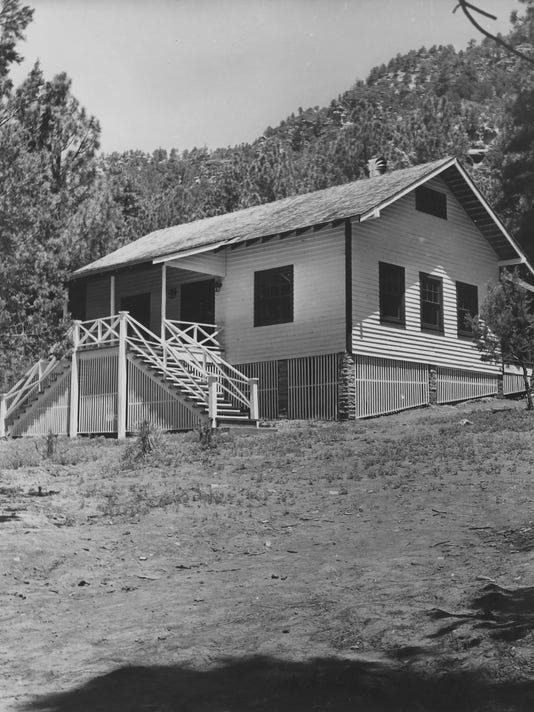
Maynard Dixon's Cabin. Image courtesy of  Bingham Gallery

Maynard Dixon Residency  


Wildfires, mountain passes with snowstorms and high winds, and sandstorms in low areas were interspersed with times of perfect lighting and full clouds above the mesas. What a blessing to spend continued time in an area of the U.S. that can be so difficult to get to. The Maynard Dixon residency allowed me to afford to stay in the area long enough to wait out the weather systems, adapt to colors and conditions, and experience the area at a deeper level. It was too difficult to blog while on the trip, but I’m back and ready to post. Thanks for waiting. Here’s a few photos of where I stayed.
(http://terrimwells.blogspot.com/2011/06/maynard-dixon-residency-1.html)


Credit: Santa Fe Art Auction
Maynard Dixon, (1875-1946), On Coming Storm, 1941 [Arizona], oil on canvas, 36 x 40 inches

Mt. Carmel
Mt. Carmel by Maynard Dixon


"My object has always been to get as close to the real thing as possible - people animals and country. The melodramatic Wild West idea is not for me the big possibility. The more lasting qualities are in the quiet and more broadly human aspects of Western life." 
-- Maynard Dixon


http://en.wikipedia.org/wiki/Maynard_Dixon
http://www.answers.com/topic/dorothea-lange
http://www.maynarddixon.org/Maynard_Dixon_photos.php
http://www.storyculture.com/blog/2008/06/maynard-dixon-a.html 
http://terrimwells.blogspot.com/2011/06/maynard-dixon-residency-1.html 
http://dorothealangeandmaynarddixon.posterous.com/tag/documentary#!/
http://www.peatom.info/artes/119821/dorothea-lange-fotografa-de-pueblo/ 
http://www.lib.utah.edu/collections/utah-artists/UAP-L.Maynard-Dixon.php 
http://www.observatoriofucatel.cl/dorothea-lange-la-retratista-de-la-gran-depresion/ 

miércoles, 7 de marzo de 2012

Tim Cahill y el ecosistema envolvente de su cabaña


writers cabin4
Tim Cahill's Cabin


“We kind of like it when the lost hunters find us.”

A Travel Writer Comes Home
Tim Cahill chronicles his exotic journeys from a small log cabin in Montana

By ALEXANDRA ALTER
Gallatin National Forest, Montana.


Tim Cahill has traveled to 100 countries, riding on horseback across the steppes of Mongolia, hiking through remote villages in southeastern Turkey in search of the supposedly extinct Caspian Tiger, driving a truck from the tip of Patagonia to Alaska and going swimming in an ice hole on the North Pole.The veteran travel writer chronicles these adventures from a 500-square-foot cabin hidden in a thickly forested river canyon in southwest Montana. The cabin sits in this national forest on the edge of the Absaroka-Beartooth Wilderness, about an hour's drive down gravel roads from the "big town" of Livingston, where Mr. Cahill has a house."It's often hilarious to me that I'm writing about Tonga or some tropical place and there's a blizzard outside and the cows are on their backs with their hooves in the air," said Mr. Cahill, a founding editor of Outside magazine and author of nine books, including "A Wolverine Is Eating My Leg" and "Jaguars Ripped My Flesh." Mr. Cahill, whose wife died in a traffic accident last year, often stays at the cabin for week-long stretches, and all told spends a couple of months out of the year there.

Built in 1931 by a dude ranch hand, the Lincoln Log-esque cabin looks like it could have been plucked off of a movie set, so much so that Mr. Cahill's 8-year-old niece asked if it was fake when she visited. Mr. Cahill, 65, bought the cabin, which came with two freestanding log guest cabins and an outhouse, in 1991 for $60,000. He leases the land, about half an acre, from the forest service for $2,605 a year.

The screen door off the kitchen opens onto a porch where Mr. Cahill sometimes makes barbecued chicken "Simon and Garfunkel style," with parsley, sage, rosemary and thyme. About 30 miles from the nearest town, he subsists on "cabin food" such as chili, ribs, or gamey stews with antelope, elk or venison. It's pretty tame fare compared to what he's sampled around the world: boiled fermented cow's nose in Bali, acacia beetles in Africa, roasted guinea pigs in Peru and baked turtle lung in Australia ("spongy," Mr. Cahill said).Hidden from the dirt road by deciduous trees, the cabin is barely big enough for the basics: a kitchen with a wood-burning Monarch stove and a dining nook, a living room with a pitched, wooden beam roof and a big stone fireplace, which warms the place up in about two hours in the winter, and a cramped bedroom that has an exposed sink, toilet and bathtub in one end (the outhouse is for the guest cabins). The living room is decorated with wicker chairs and a sofa that evokes the 1970s. Mr. Cahill's desk sits in a corner that's crammed with books, including "Edible Native Plants of the Rocky Mountains" and "Field Guide to Western Birds."

The main attraction lies just off the property. The 1.8 million-acre Gallatin forest spans six mountain ranges and is part of the Greater Yellowstone Area, the largest intact ecosystem in the continental U.S. "My backyard, honest to God, is pretty much the size of Switzerland," Mr. Cahill said. The cabin is one of 198 privately owned cabins; the forest service charges private owners an annual permit fee through a "recreation residence program" that dates back to the early 1890s. A similar 546-square-foot one-bedroom cabin in the Gallatin Canyon is on the market for $125,000.

Mr. Cahill has frequently wandered in Montana's vast parks and back country, misadventures he chronicled in his 2004 book "Lost in My Own Backyard." He describes the unnerving feeling of being "alone, twenty miles from the nearest road, and you've just found a grizzly bear track the size of a pizza."

Larry Lahren, an archaeologist who lives nearby, said Mr. Cahill has survived such excursions through "pure luck." Once, when the two of them were hunting antelope, Mr. Cahill forgot his sleeping bag, said Mr. Lahren, who added that Mr. Cahill was "the ultimate greenhorn" when he first arrived in Montana. "He was the world's worst horseback rider," he said.

Southwest Montana has long attracted writers, artists and celebrities. Mr. Cahill counts novelists Jim Harrison, Walter Kirn and Tom McGuane among his neighbors. Mr. Cahill moved to Livingston in 1979, but as the town grew into a creative hub with more than a dozen art galleries, Mr. Cahill decided he needed a place where he could write without people dropping by or inviting him out.

"For a guy who doesn't like crowds, he's always got people seeking him out," Scott McMillion, a Montana native and writer who has known Mr. Cahill for more than 20 years.

Mr. Cahill usually writes in the morning, then takes a long hike on one of the many trails leading up into the mountains of a thickly forested canyon. His favorite walks are along the river, or up into the foothills behind his cabin, to a spot where two branches of creek collide and throw a colorful prism of mist into the air. "The shafts of light that come through have the quality of light that comes through a stained glass cathedral," Mr. Cahill said. "It all combines to make me feel good and rooted."
(Write to Alexandra Alter. Photography by Janie Osborne of the Wall Street Journal)


Adventure writer Tim Cahill often retreats to his remote log cabin in southwest Montana in the Gallatin National Forest: 


http://tinyhouseblog.com/log-construction/tim-cahills-log-cabin/ http://online.wsj.com/article/SB10001424052748704402404574527773790795630.html 

martes, 6 de marzo de 2012

La cabaña de Zane Grey


Resultado de imagen de zane grey
Inveterate angler Zane Grey, writer of highly popular Western fiction, first visited Oregon in 1919 to fish the waters of the Rogue River and Crater Lake. He returned to the Rogue throughout the 1920s, turning his 1925 drift-boat expedition down the length of the lower Rogue into a chapter of his Tales of Fresh Water Fishing (1928). The trip also inspired his 1929 novel Rogue River Feud, which traded wild mustangs on the range for drift boats in whitewater rapids and the usual rapacious cattle baron for a villainous salmon-packing magnate (loosely based on R. D. Hume). Grey eventually became less enchanted with the Rogue as it became increasingly fished. By the mid-1930s, the North Umpqua River had become Grey’s favorite Oregon stream.

Zane Grey helped popularize fly fishing for salmon and steehead in the Far West, and his writings helped give the Rogue and Umpqua their national reputations as preeminent steelhead-trout streams. He promoted conservation in many of his writings, condemning the Rogue’s salmon hatcheries as inevitably leading to “quantity over quality” and promoting judicious sport fishing at a time when most anglers proudly posed with huge strings of trout. To Grey, rural Oregon fishermen were wasteful rustics. For their part, local residents later recalled Grey as an elitist “dude.”

Born and raised in Zanesville, Ohio (named for his ancestors), Grey graduated from the University of Pennsylvania in 1896 with a degree in dentistry, and opened a practice in New York City. In 1912, he wrote his third Western, the phenomenally popular Riders of the Purple Sage. That novel was followed by a long string of successes, and Grey became one of the best-selling novelists of the twentieth century. Critics were not as kind to him as readers, however, and some dismissed him as "The Writer of the Purple Prose" because of his formulaic, florid style. In spite of Grey's critics, Hollywood converted nearly fifty of his novels into films, the most of any Western author.

In 1918, Grey (by then wealthy from his writing career) purchased a mansion outside Los Angeles, California, where he lived for the remainder of his life. Grey’s fishing cabin at Winkle Bar, in the still-remote lower Rogue River canyon, remains a favorite stopping point for groups of whitewater boaters. Long privately held, his property on Winkle Bar was purchased by the Trust for Public Land, which in 2008 transferred it to the U.S. Bureau of Land Management, thereby guaranteeing public access and providing for long-term preservation of Grey's historic cabin.
Written by: Jeff LaLande (http://www.oregonencyclopedia.org/entry/view/zane_grey_1872_1939_/)


Best-selling Western author Zane Grey built a one-room cabin on the Rogue River in southern Oregon 1926. He used it as his retreat for writing, and also to indulge his other passion: fishing for the river's salmon and steelhead trout. Today the Rogue is a national Wild and Scenic River, and Grey's one-room cabin remains, surrounded by Bureau of Land Management (BLM) wilderness.


Resultado de imagen de zane grey
Una foto de 1964 muestra la cabaña de Zane Grey antes de que fuera destruida en el Dude Fire de 1990.

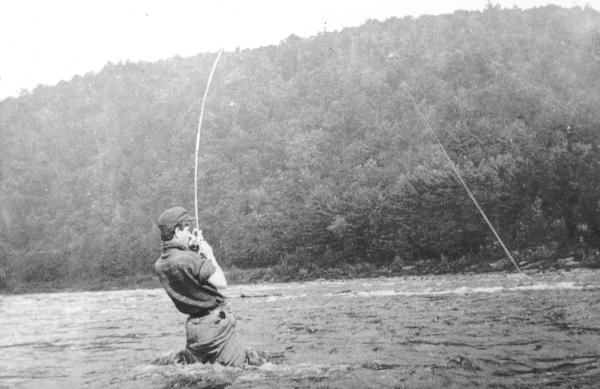
Famous western author Zane Grey shoots the Rogue River Rapids at Lower Black Bar during a 1925 fishing excursion. He later memorialized the Oregon wilderness in his novel Rogue River Feud.

“It was a river at its birth; and it glided away through the Oregon forest, with hurrying momentum, as if eager to begin the long leap down through the Siskiyous. The giant firs shaded it; the deer drank from it; the little black-backed trout rose greedily to floating floes.” —from Rogue River Feud


“He had a leathery, weather-beaten face, homely and hard, unshaven and dirty, yet despite these features and the unmistakable imprint of the bottle, somehow far from revolting. Perhaps that was due to the large, wide-open, questioning blue."

In September 1926, Zane Grey built a rustic cabin on the site with the help of local river guide Claude Bardon. It took the men three months to build the one-room log cabin, using timber from the property. Zane Grey’s cabin was built the same way that old miners had built their cabins for hundreds of years. 

“And the river glided on in an endless solitude, its eternal song, low and musical, near at hand, droning sweet melody from the rapid at the bend, and filling the distant drowsy aire with its soft thunder.”

 
Zane Grey fishing in the Delaware River near Lackawaxen, PA, circa 1910.
Courtesy of the Upper Delaware Scenic and Recreational River, National Park Service, Zane Grey Museum 


http://www.biography.com/people/zane-grey-9320674
http://forums.bajanomad.com/viewthread.php?tid=41676
http://www.oregonencyclopedia.org/entry/view/zane_grey_1872_1939_/


El santuario personal de Hap Wilson

P9300369


Hap Wilson
Environmentalist / Nature Writer


David “Hap” Wilson’s was “the quintessential dysfunctional student”, constantly raising the ire of teachers. “I spent more time at my desk in the hallway than in the classroom, was once disqualified during track and field events because I ran the cinder track in bare feet and was called down to the principal’s office because I illustrated on the border of a hand-out sheet. I remember Mr. O’Beirn saying that ‘this will reflect negatively on your future’. There were times, though, that I thoroughly enjoyed the school dynamic…the challenges. My family was separating at the time so it was particularly hard for me to adjust and to trust authority, hence the reason why I continued to question authority and become an environmental activist!”
 Luckily for nature lovers, wilderness trippers and environmentalist everywhere, Hap Wilson chose canoes over comics, started a love affair with the wilderness and carved out a career for himself that is unmatched in this country. He was nurtured by the outdoors and saw the irreparable damage done by developers and industry to the wilderness (his home) and needed to become actively involved in protecting it. Hap has been a wilderness guide for over 30 years. He has led over 300 wilderness expeditions in Canada and is well known for his ecotourism / travel guidebooks. His expertise serves him well in his many endeavours from operating his ecological tour company, Sunrise Adventures, to his work as an eco-tourism consultant. He co-founded the group “Earthroots” in 1986 and is still active as a board member along with well-known lawyer, Clayton Ruby; has been a speaker at several high school functions, including Cum Laude grad dinners in the U.S and was even retained as actor Pierce Brosnan’s personal wilderness trainer for the feature film “Grey Owl”
 Hap is also a self-taught professional artist, photographer and writer. He began with his own illustrating business after high school, producing over 200 illustrations for customers such as Simpsons, Austin Marshall Card Co., Pioneer Village and Armadale Communications. He won the “Preserve North York in Paint” contest in 1972 and his painting hangs in the council chambers in North York. Mr. Wilson has written eight books beginning in 1978 with Temagami Canoe Routes, and including Rivers of the Upper Ottawa Valley [1993], Canoeing and Hiking Wild Muskoka [2002] and The Cabin [2005]. Hap has also produced a beautiful coffee table photo book entitled Wilderness Manitoba. He writes for several magazines. His original maps and illustrations were featured in the Canada Parks book, Voyages - Canada’s Heritage Rivers, which won the National Resources Council of America Award for best environmental book of 1995. In 2007 he capped his career to date when he was presented with the prestigious Bill Mason Award for a lifetime of conservation efforts. Hap is currently developing 60 km. of wilderness hiking and cross country trails at the 700 acre nature reserve and resort, Red Leaves, on the shores of Lake Rosseau in Muskoka. He lives with his two young children and alternates between his cabin in Temagami and a Muskoka farm.
 Mr. Wilson has two messages for students: “After you finish school, buy a backpack and travel “and “One must persevere and not forget what is important ... Life is more about grounding, sharing and giving than making money. Never stop learning, never stop questioning. This is the formula for success and clarity and peace”.(http://www.kcss50th.com/index.cfm?pagepath=&id=32580)


"When I first ventured to Temagami in the early spring of 1970, paddling solo in a fourteen-foot cedar-canvas canoe, with the snow falling and the ice still partially on the lake, I passed through a portal into another world – Grey Owl’s world – and I knew I had found my home." - Hap Wilson, Grey Owl and Me, p. 18


"And all of the Voices of the Night are all around me, and swift rustlings, soft whisperings and almost noiseless noises encompass me about.

And the moon throws eerie shadows down along the aisles between the trees, where strange shapes and formless objects stand like waiting apparitions, where moonbeams lie in glimmering pools, and spots of light like eyes peer out from the darksome ambuscade.

On the shore, in a little group, some tiny beavers sit, and sniff, and look, and whisper low, like children seeing goblins in a graveyard." – Grey Owl, Tales Of An Empty Cabin 


Cubierta para The Cabin


“We stood at a long, sloping bedrock terrace; before us, riverside, was a neatly trimmed, brown log cabin, and set below the cabin, overlooking the falls, was a quaint canopied gazebo. And elderly man was waving us over. Excited to know more about this haven in the midst of rock and pine, miles from anywhere, we complied and met the man on the deck with a barrage of questions. He welcomed us by pouring freshly brewed cofe in real ceramic mugs.” ~ Hap Wilson, The Cabin, (upon viewing this wilderness cabin paradise for the very first time as a young lad)


Overview

One hundred years ago, a young doctor from Cleveland by the name of Robert Newcomb, travelled north to a place called Temagami. It was as far north as one could travel by any modern means. Beautiful beyond any simple expletive, the Temagami wilderness was a land rich in timber, clear-water lakes, fast flowing rivers, mystery and adventure. Newcomb befriended the local Aboriginals -- the Deep Water People -- and quickly discovered the best way to explore was by canoe. Bewitched by the spirit of an interior river named after the elusive brook trout, Majamagosibi, Newcomb had a remote cabin built overlooking one of her precipitous cataracts.

The cabin remained unused for decades, save for a few passing canoeists; it changed ownership twice and slowly began to show its age. The author discovered the cabin while on a canoe trip in 1970. Like Newcomb, Hap Wilson was lured to Temagami in pursuit of adventure and personal sanctuary. That search for sanctuary took the author incredible distances by canoe and snowshoe, through near death experiences and Herculean challenges. Secretly building cabins, homesteading and working as a park ranger, Wilson finally became owner of The Cabin in 2000.

Artist, author and adventurer, Hap Wilson is perhaps best known for his ecotourism/travel guidebooks. He has led over 300 wilderness expeditions in Canada, and served as actor Pierce Brosnan's personal outdoor trainer for the feature film Grey Owl. "This is a complex and fascinating story, beautifully told. At first, it draws us in because the author appears to be living the life we all dream of-a simpler life, close to nature, free from the stress and strain of our consumer culture. But the reality, with its myriad challenges, is what holds our attention and gives the book its substance."
- Judith Ruan, Muskoka Magazine|||This eBook is sold by Sony Electronics Inc.
(http://ebookstore.sony.com/ebook/hap-wilson/the-cabin/_/R-400000000000000498490)


Cabin Falls 

Famed because it is the location of Hap Wilson and Stephanie Aykroyd's cabin, Eskakwa Lodge. The most widely-used name for this falls is Hyde's Cabin, commonly shortened to Cabin Falls. 
The original log cabin was built in 1931 by a group, mostly consisting of Lake Temagami cottagers, led by Adrian Newcomb. Katharine Hyde was the last surviving member of the group. The falls have been less commonly known as Twin Sisters, and sometimes confused with Bridal Veil.

Twin Sisters Falls, home of the Hap Wilson Institute. I mean cabin. I'd say it blends in fairly well

Hap Wilson is another one of Canada's canoe heroes, If you have ever planned a trip to Missinaibi, or Temagami you probably have used his guide books. He has also written other books about camping and wilderness tripping. One of my favorites is "The Cabin: A Search for Personal Sanctuary". He illustrates all his books, whether it be maps of a route or wonderfully rich landscapes all done in pen and ink. His illustraion are so clear and beautiful! Mr. Wilson has quite the history in the wild, he has worked as a portage maintenance worker in the 70's (dream job.), a guide, fought the logging industry, owned a outfitters, and turned Temagami in to one of the world busiest canoe areas. (Posted by Chris Adamiak-http://www.damnyak.ca/2011/08/hap-wilson.html)

Photo: cabin at Cabin Falls, Lady Evelyn River, Temagami
Cabin Falls. PHOTO HAP WILSON

(...) The Lady Evelyn River cabin is the only private property in the park, pre-dating its creation. Perched at the lip of Cabin Falls, it is probably one of the most idyllic and stunning wilderness cabins in eastern Canada. It is a setting in his 2005 memoir The Cabin. (...)http://www.ottertooth.com/Temagami/News/newsbriefs-064.htm


"And the tree that lived so long, stood patiently and waited for the end. The first axe struck. The tree gave no sign, but stood in all its grand composure and nobility to the last – and then swayed a little, and started on its journey to the ground. With a moaning, screaming cry, as its fibres ripped apart and its sweeping superstructure tore downwards through the air, the mighty conifer crashed to earth…" - Grey Owl, Tales of an Empty Cabin, “The Tree"


Print by Hap Wilson


http://www.sunriseadventures.com/
http://www.damnyak.ca/2011/08/hap-wilson.html
http://www.kcss50th.com/index.cfm?pagepath=&id=32580
http://reflectionsoutdoors.wordpress.com/tag/hap-wilson/
http://www.ottertooth.com/Temagami/Sites/south-channel1.htm
http://ebookstore.sony.com/ebook/hap-wilson/the-cabin/_/R-400000000000000498490

lunes, 5 de marzo de 2012

La cabaña de Josh Weil, su mejor escritura


Josh Weil


Josh Weil was born in the Appalachian Mountains of rural Virginia to which he returned to write the novellas in his first book, The New Valley.

A New York Times Editors Choice, The New Valley won the Sue Kaufman Prize for First Fiction from The American Academy of Arts and Letters; the New Writers Award from the GLCA; a “5 Under 35” Award from the National Book Foundation; and was shortlisted for the Library of Virginia’s literary award in fiction. Weil’s other fiction has appeared in such publications as Granta, One Story and Agni, and he has written non-fiction for The New York Times, Oxford American, and Poets & Writers. The recipient of fellowships and awards from the Fulbright Foundation, the Dana Foundation, the Bread Loaf and Sewanee Writers’ Conferences, the James Merrill House, and the MacDowell Colony, he has taught at Bowling Green State University as the Distinguished Visiting Writer and been the Tickner Writer-in-Residence at Gilman School.

Currently living and teaching in Oxford, MS, as the University of Mississippi’s John & Rene Grisham Emerging Southern Writer, he is at work on a novel. (Josh’s Web site)


Author Josh Weil: Writing from Heartbreak

(...) TR: You wrote the book in a Blue Ridge cabin. How did the cabin enter your life? What sets it apart for you?
JW: My dad bought land in the Blue Ridge a long time ago, when he was younger than I am now, thought he’d farm it but then had to move away and, for a long time, we didn’t do much with it. It grew up in trees, got overrun with scrub, went wild. Then, when I was 19, we decided to clear a couple acres. We lived on it in a big tent — my brother and dad and I — and hacked away with chainsaws and machetes and a brush hog and then, with the help of a local farmer (who pretty much told us what to do, and we did it) we built a cabin in the clearing.
I had no idea how important that place would become to me. It’s where I’ve done all my best writing; it’s where I return to when I need to get back to myself. And it’s pretty isolated. I’ve gone weeks down there without seeing another person. Down there I can get back to the basic, simplicities of life — everything from eating hot potatoes while I hike up to the ridge, to splitting wood — and I can shove the real world away for a while. And that, for me, is pretty central to being able to live in the world of my fiction, which is the only way I know how to write it well. (Author Josh Weil: Writing from Heartbreak. http://therevivalist.info/josh-weil/)


images.cgi


The New Valley: An Interview with Author Josh Weil
Chris Arvidson, Assistant Director of the National Committee for the New River, interviewed Josh Weil about his new book The New Valley


CHRIS: Your writing is powerfully rooted in a sense of place. Tell us about your growing up in the New River Valley and the influence of that landscape on your writing.
JOSH: Well, I was born in The New River Valley, but my family moved away when I was very young so I actually didn’t really grow up in it. But it was where I became an adult and where, now that I am one, I think of as home. When I was 19, my father—who has owned land on a ridge since he was younger than I am now—decided he wanted to build a cabin. He, my brother, and I, all camped out for a summer on the land, clearing a few acres with chainsaws and brush hogs, and machetes, and then, with the help of a local farmer, we built the cabin where I live when I’m in The New River Valley now.
The landscape and the people who live in it have played a huge role in my writing. I often go for hikes up to the ridge top when I’m working on something, and I do my best thinking then; I often come up with the solution to whatever problem is going on in a story, and I run down and try to get it down on the page. And because I happen to be moving through the landscape while I’m thinking about it, the specifics of the physical world—the way a patch of rhododendrons looks under first snow; the way wild turkeys sound clattering through the leaves; maybe I spot a morel (or merkel, as the locals call them) and that jogs my memory about a guy I know who goes out hunting for them every spring, and I end up writing about that. It’s that kind of thing. And, of course, the weather and geography and remoteness of the place affect the ambiance of my work in ways that are as strong as character.
CHRIS: Tell us about any of your experiences on the New River itself.
JOSH: I have more experience with some of the tributaries. There’s one that runs near the cabin (Sinking Creek) and I’ve tried fishing in there, and talked with a neighbor who farms his own trout in there, and I’ve watched it flood right up to the road, and, of course, I hear it—the sound of it—as a kind of soundscape to my life when I’m down there. I was working on a novel that took place beside a river like the New River, in a trailer right on the bank, and I needed to know exactly how that would affect the landscape and soundscape (and smells) of the world, in daytime, and in night, so I have the New River to thank for that. Plus, it was awfully nice just hanging out by its banks.
CHRIS: I tell people that when they read the “Ridge Weather” story, they’ll be able to smell the cow flop, so strong are your invocations of the rural landscape. What has the reaction been from rural people to your characters in the stories?
JOSH: You know, I was worried about that. Because it’s really important to me that what I’m writing doesn’t feel like it’s mocking or dismissive of Appalachian rural life in any way. I feel the opposite: I have a real connection and love for the people who are my neighbors, and I hope that comes through. But you never know. So, one of the most gratifying aspects of publishing this book has been the way the local people—my neighbors—have responded to it. The first reading I did was at a general store run by a woman who has a small dairy herd. She was there, and her husband. And my 86-year-old neighbor from down the mountain (he and I exchange asparagus and apple butter, whisky and eggs) was there. And a few others. And they sat and listened and then afterwards we all talked about gun holes in the sides of old mountain homes and I gave them some books and they were nothing but excited for me and proud of me. It was really touching. Then, just the other night, I read in Blacksburg and two people who live in trailers on my road out in the valley came by and surprised me. They bought a couple books and told me how pleased they were with what I was doing. It meant the world to me.
CHRIS: In the “Stillman Wing” story, water is malevolent and magical at the same time. Tell us about how water influences your characters.
JOSH: What an interesting question, and one I’ve never been asked before. But it’s a good one, and insightful. There is something particularly moving about water. The idea of a spring up in the mountains, how it’s so essential to existence up there, the way that small settlements crop up around a good spring and you can still see the stones of the spring box or the old split rail fences or cellar walls a century later: I find that all so evocative of the passage of time, and the elemental needs that stay the same. There’s a sense of mystery about water, especially rivers, which I think is important to my work, too.
In “Sarverville Remains,” the final novella, the river is something that comes from a place unknown and goes to a place other than the one where the main character is trapped, and so it comes to represent a kind of escape, and a kind of mysterious wonder. Of course, rivers have held writers imagination in those ways for a long time. Just look at Huck Finn. In “Stillman Wing,” the second novella, there’s both the river—which floods, and which leads from a world that scares the main character, and threatens to disrupt his carefully constructed life—and there’s the pond, which is, as you say, more of a malevolent thing, though its malevolence is wrapped up in wonder and magic and, in the end, something of a salvation.
I think that might come from an entirely personal thing: I have an irrational and intense fear of deep, dark water. Oceans, mostly, but lakes and ponds, too. I get panicked about it: the way you can’t see what’s under you. It just creeps me out. I think I’ve got a handle on it, now—I make myself swim in deep lakes, and find I love it once I can get myself calm—but I guess maybe it’s just shifted over into my fiction.
CHRIS: Tell us a bit about your cabin, how you decided to buy it, and about the place it serves in your writing life.
JOSH: We built it! My brother, dad, and I. No buying involved at all. Except for the land. My dad bought that when he was in his 20s and he thought he’d start a small experimental farm there (he’s a soil scientist). He and my mom were going to be back-to-the-landers. But life took them away from the land, and it wasn’t until almost 20 years later that my dad came back to it and we built the cabin over one of the most enjoyable summers of my life.
There was this farmer, the hardest worker I know, and he’d built some barns. He was our foreman. And we put together a beautiful place. Just one big room, really, and a ladder to an attic where I sleep. A wood stove, spring water running through the pipes non-stop to keep from freezing in the winter (which it does, sometimes, anyway). Over the years, we’ve build woodsheds, a grape arbor, a stone path, put in a big garden, some fruit trees. It’s the most peaceful place I know. And it’s where I go to get away from the stresses and distractions of everyday life. It’s those things that kill the writing, I think. And it’s getting them out of my mind that lets me do my best work. So I’ve written most of what I love down at that cabin. I’d be lost without it. Luckily, I’ve had stray months here or there when I can go down and hole up and write. Last year I was there for 7 months straight.
CHRIS: Do you have more stories to tell about the New River Valley? What can you share about what you are working on now?
JOSH: I definitely have more stories to tell set in the New River Valley area, and I think I’ll tell some of them before too long. Right now I’m working on something that’s set somewhere else entirely—in a factory town in northern Russia where I spent a little time as a kid—but there’s a novel set in the fictional valley based on The New River Valley that has been kicking around in my head (and on the page) for a while, and that I know I’ll write eventually. It’s about a dairy farmer, and the development that is, sadly, threatening the New River Valley, and his struggle against it to protect his way of life. It already has a hold on my heart, so I know that eventually I’ll come back down to the cabin and shut out the rest of the world and write that story, too. (Chris Arvidson, Assistant Director of the National Committee for the New River, interviewed Josh Weil about his new book The New Valley - http://newrivervoice.com/archives/3262)


http://therevivalist.info/josh-weil/
http://margorabb.com/blog/?p=949
http://newrivervoice.com/archives/3262 
http://www.joshweil.com/joshweil.com/Biography.html 
http://fictionwritersreview.com/interviews/a-finely-focused-lens-an-interview-with-josh-weil 
http://redandblack.com/2011/02/28/author-calls-mountain-cabin-%E2%80%98home%E2%80%99/ 

Fiebre de Cabaña en Tom Montgomery Fate


About Cabin Fever
Tom Montgomery Fate

"Try to imagine Thoreau married, with a job, three kids, and a minivan. This is the serious yet irreverent sensibility that suffuses Cabin Fever, as the author seeks to apply the hermit-philosopher’s insights to a busy modern life.
Tom Montgomery Fate lives in a Chicago suburb, where he is a husband, father, professor, and active member of his community. He also lives in a cabin built with the help of friends in the Michigan woods, where he walks by the river, chops wood, and reads Thoreau by candle light. 
A seasonal nature memoir, Cabin Fever takes readers on a search for the wild both in the woods and within ourselves. Although we are often estranged from nature in our daily lives, Fate shows that we can still recover our kinship with the earth and its other inhabitants if we are willing to pay attention. 
In his exploration of how we are to live "a more deliberate life" amid a high-tech material world, Fate invites readers into an interrogation of their own lives, and into a new kind of vision: the possibility of enough in a culture of more" (http://tommontgomeryfate.com/author.html)


Excerpts from Cabin Fever by Tom Montgomery Fate


When I first read Henry David Thoreau's classic nature memoir, Walden, I was an intensely idealistic 18-year-old college freshman at the University of Iowa. When I read it again, thirty years later (during a sabbatical), I was a harried and married 48 year-old father of three in suburban Chicago. And while the famous hermit-philosopher had again inspired me, it was different from the first time I read it. The book called me with more urgency—from my distracted middle-class, middle-aged life into the wild solitude it conjured. So, over the next four years, I wrote my own seasonal memoir in response to Thoreau and to Walden—an attempt to explore its modern relevance. The result was Cabin Fever: A Suburban Father's Search for the Wild (Beacon Press, 2011). Several short excerpts follow.

From "In the Time of the Cicadas" (Chapter 7):
Over the next few days the cicada population explodes: up to a million per acre—maybe 300,000 in our back yard. Some of our neighbors are repulsed by the swarms of bugs clinging to their bushes and flowers, or falling out of trees into their hair during an evening stroll. But others, like me, find them miraculous: seventeen years of patience, of darkness, followed by a few weeks of passion, of sunlight and sex. Each night, I sit outside and listen to the newest arrivals move through the grass and leaves: chaotic platoons of red-eyed soldiers crunching over thousands of their own brittle casings. Then up the trees they march to wait for the sun and sing for a mate.
From "The Art of Dying" (Chapter 15):
I have been dead for a long time when I finally catch the delicate scent of my carnation—just a trace, just for a second. A pigeon coos as he struts along the edge of my sheet. Then a little girl—one of the children of the temporarily dead—starts giggling about something. Her clicking shoes skip through the odd labyrinth of flower-adorned bodies.

I'm not sure why I came to this demonstration. I need to go grocery shopping and I have stacks of papers to grade. What motivated me? Guilt? Yes, partly. The belief I'm making a difference? No. I don't think so. The hope that this theater of the absurd will help alleviate the suffering of the Iraqi people? No, not really. It's less noble, less clear. I'm just trying to learn how to believe in something, how to see in the dark.
From "Deliberate Life" (Introduction):
My 7-year-old son, Bennett, sometimes tries to balance himself on the creaky iron fulcrum of a wooden teeter totter at the playground. He jumps up on the heavy plank and puts one foot on each side of the center. Then he shifts his weight, pushing one end of the plank down, causing the other end to rise. He tries to stay balanced and level but can't for more than a few seconds. One side always starts to teeter up or totter down. He doesn't stay centered, but neither does he ever fall off. This struggle for balance, the rising and falling between the earth and sky, gives him great joy. And he gives that joy to me, if I'm paying attention. 
(http://codfaculty.org/newsletter/1109.php) 
Tom Montgomery Fate's nature memoir 'Cabin Fever' will be released on June 7. Photo courtesy of Tom Montgomery Fate


http://tommontgomeryfate.com/author.html
http://codfaculty.org/newsletter/1109.php
https://www.wbez.org/stories/writer-tom-montgomery-fate-reflects-on-cabin-fever/c9c511bd-9c7b-49da-8c72-8b5aa15d9886

Lou Ureneck: una cabaña en construcción

Cabin dreamer
BU professor Lou Ureneck built a Maine retreat – then wrote a book about it.


Boston University professor Lou Ureneck is publishing a Thoreau-like book called “Cabin.” It is about his experiences building this cabin with his brother in Stoneham, Maine.
Boston University professor Lou Ureneck is publishing a Thoreau-like book called “Cabin.”
It is about his experiences building this cabin with his brother in Stoneham, Maine.


Finished Outside View/Courtesy: Lou Ureneck

11cabin.1-650.jpg
An early blueprint of the cabin.


title55 Assembled from Scratch

For most people, the thought of building a home from scratch would be enough to lay the foundation for a mid-life crisis. For Lou Ureneck, building the framework for a cabin in the woods is precisely the means for avoiding such a breakdown. While he gathers the various items he’ll need to complete the job, he also assembles a story to go along with the assembled structure, in which he tracks the course of the project, from the point of inspiration to his family’s first Thanksgiving dinner inside the cabin’s walls. It makes for a charming new memoir, based on a blog he wrote for The New York Times during the construction process, with the straightforward title Cabin.
Ureneck’s motives are more complex than simply wanting a place for getting away. He conceives of the idea to build his very own cabin in the deep woods of Maine, not far from his brother Paul’s Portland home, as a response to the spate of bad fortune and difficult transitions taking hold of his life in the midst of his middle aged years – a failed marriage, a recently deceased mother, a newly empty nest, and a health scare of his own to top it off. This new getaway house, he figures, would provide respite from the complications of the outside world. Most likely, it would also reconnect him to his brother’s family after too many years of distance, both geographic and emotional. And having his brother’s family around might also provide some vital manpower from the pouring of the concrete foundation piers to the building of the timber-frame structure, the rafters and ultimately the roof.


Foundation/Courtesy: Lou Ureneck

Sure enough, through months of hard work and one stomach-wrenching scene involving a bruised fingernail, the family builds a new house, and the author begins to reassemble the parts of his life that have gone missing over the years.
Rest assured, this is no vacation house, and it’s not a designer log cabin. Ureneck takes pains to make those distinctions. On the contrary, he’s hoping to build something on his five-acre parcel in the lee of the White Mountains that’s right out of the 18th Century Transcendentalist playbook. A shelter, in Thoreau’s words, is one of those things deemed “necessary of life,” and yet, the precise form of shelter makes a tremendous difference. Civilized life offers its advantages, but only when “it has produced better dwellings without making them more costly” can the condition of man be said to advance (“and the cost of a thing is the amount of what I will call life which is required to be exchanged for it”), Thoreau writes in “Economy.” With that criterion in mind, Ureneck’s cabin would likely pass the Thoreauvian test, built as it is with the utmost intentions of simplicity in mind.
That’s not to say that there aren’t limits to the project’s success at maintaining that simplicity. Even as he makes sure to use local lumber, Ureneck finds that in a globalized world, he’s unable to avoid using nails from China.


Building Frame/Courtesy: Lou Ureneck

The absence of Paul’s oldest son is felt during the young man’s tour of duty in Iraq. It seems that life outside the woods has a way of inserting itself, as does a past that did its damage in Lou and Paul’s lives. We learn that the brothers lived in 17 different homes while growing up in New Jersey, and the house they occupied for the longest period, four years, was ultimately foreclosed upon. Their father abandoned their mother early on, and their later stepfather’s alcoholism brings a new set of troubles, all of which conspires to steal some of the innocence of early childhood from their lives. Building a permanent home, a place for their grown children to gather, is their attempt at escaping the complications that have interfered over time and at returning to something more basic. Some of the most vivid passages come from the author’s recollections of first discovering nature as a young boy, exploring the littorals of the Jersey shore, netting blue-claw crabs, and longing even that early on for an untouched landscape that preceded him. This pull to the outdoors is what Thoreau had in mind when he described the child’s urge to begin the world anew, to live in a sense like the earliest members of the human race. Teaching at a city university with his only connection to nature taking the form of walks through a manicured public park, Ureneck sees the Maine wilderness as the place where he can begin his life anew.

Lou and Paul/Courtesy: Lou Ureneck


The construction of the cabin unfolds over the course of a year, and as it passes through its many stages, the chapters in this book include a few asides. Digging holes for the foundation is an excuse to explore the glacial history of the region. Collecting logs for the siding allows for a history lesson about life among the Algonquin and Abenaki before the area’s forests were cleared to become farm and pasture land. Sometimes these digressions help to characterize the land upon which the cabin is being built, but too often they tend to drag. Parts of the book could also use some reorganizing. Readers are likely to find that it is the personal story being told that resonates most strongly.
A memoir about, say, redoing a kitchen to stave off retirement age boredom doesn’t sound quite as appealing. But the lure of a cabin in the New England forest ensures that readers will be enchanted by the prospect of inhabiting such a space. Ureneck’s evocations of what it is like to come upon an unsuspecting bull moose at the edge of a pond or to observe the soft tones of the icy Maine landscape in wintertime palpably bring to mind the aspects that are most sacred in nature. And if he throws in an account of designing a septic system, that’s just another item on the checklist toward making the woods his own.
Fuente: Book, Greenspace September 23, 2011 By Jordan Sayle  (http://www.planet-mag.com/2011/book/jordan-sayle/assembled-from-scratch/)


Follow Lou's progress on The New York Times blog From the Ground Up.NY Times website
http://www.bostonglobe.com/magazine/2011/10/20/cabin-dreamer/dLhIZ3eHeFIsrGDjIDmeXK/story.html
http://www.planet-mag.com/2011/book/jordan-sayle/assembled-from-scratch/
http://thewildwood.wordpress.com/tag/lou-ureneck/

sábado, 3 de marzo de 2012

Desde el fondo de la cabaña de Jean Désy

Jean Désy: écrire pour mieux vivre

Le Dr Jean Désy

(Photo: Le Soleil)

«J’écris à propos de ma difficulté d’être heureux comme médecin dans une société que je trouve, souvent, puissamment insignifiante, mais société qui me nourrit bien, qui n’a pas que des défauts, je sais, mais société agonique, cynique, agnostique et heureuse de l’être…»


« Du fond de ma cabane, 
Éloge de la forêt et du sacré », 
Jean Désy 
(éd. XYZ, 2002, 165 pages)

Par ces temps troublés que nous traversons, Jean Désy nous fournit mille et une raisons de tout vendre et de tout abandonner pour nous retrouver en plein bois, loin de la « civilisation ». C'est volontairement que Désy a décidé de quitter un emploi payant, le confort et les contraintes du mode de vie occidentale pour se terrer dans sa cabane qu'il a construite en forêt, trouvant ainsi la paix et la tranquillité qu'il chérit tant. Son récit nous transporte dans un univers bucolique où règne l'harmonie et la joie de vivre. Beaucoup d'entre nous souhaiteraient avoir le courage de Désy qui s'est permis une radicale rupture avec notre société de consommation, de performance et de production afin de pouvoir vivre en toute liberté dans la nature.

L'auteur ne se contente pas de nous raconter ses moments tendres et charmants avec les animaux, les arbres et les lacs, il nous amène à réfléchir sur nos gestes et nos attitudes, notre façon de voir la vie. Notre rapport avec l'environnement est ici remise en question et ce n'est pas un scientifique qui nous lance un message mais un homme des bois, un être humain qui évolue chaque jour au cœur de la nature. Même s'il doit chasser pour survivre, il avoue que cette activité lui est pénible: « Mais quelle difficulté de chasser les bêtes en les aimant ! » (p.125) Désy a un grand respect de tous les êtres vivants et il cherche à comprendre cette hiérarchie des valeurs que nous avons échafaudé probablement pour nous déculpabiliser: une mouche est-elle moins importante qu'un caribou ? Il croit donc qu'un jour le végétarisme constituera « peut-être une étape évolutive plus harmonieuse dans l'échelle des valeurs que les humains du monde entier devront un jour adopter. » (p.126)

Il mentionne que dans la forêt près de chez lui, on a abattu une épinette noire pour construire un sentier pour les motoneiges. Cet arbre avait 150 ans! Désy est impressionné par la vivacité de la nature qui dépasse la compréhension humaine. Il saisit mal ce besoin de l'homme à tout dominer, à tout exploiter et à soumettre à ses volontés alors que bien des choses de la nature nous échappent.

Il y a une profonde spiritualité qui transpire dans le texte de Désy, touchante et apaisante: « Canoter (…) c'est entrer en relation avec le paysage, ses eaux, ses courants et ses froidures, c'est prier avec les poissons et leur limon, c'est discuter de migration, de brindilles et de nid avec les canards pilets, c'est vibrer avec les libellules à la dérive et les chenilles dans le gosier des ouaouarons, et c'est se muer en pitoune abandonnée par des siècles de drave ». (p.71)

Pas de doute, cet ouvrage est un véritable éloge à la nature écrit avec passion et sagesse. On devrait recommander la lecture de ce livre aux dirigeants afin qu'ils puissent réfléchir sur le sens du respect de la vie. De même, l'ouvrage mériterait d'être lu par nous tous car voilà une occasion pour se donner un moment de répit dans nos vies mouvementées et tourmentées pour nous demander si, par hasard, nous ne passons pas à côté du bonheur…En effet, il semble que le bonheur soit si simple alors que nous nous compliquons souvent la vie… À lire absolument !

http://132.210.161.89/amlfc/Articles/1999_04_05.html
http://www.cyberpresse.ca/arts/livres/entrevues/201105/13/01-4399053-jean-desy-ecrire-pour-mieux-vivre.php


Philip Pullman y su cabaña de escritor en el jardín


Philip Pullman's shed


Philip Pullman wrote the His Dark Materials trilogy in a 12ft by 8ft wooden shed in his back garden in Oxford and was so closely associated with it that in The Independent newspaper’s ‘You Ask The Questions’ column sent in by readers, one question was ‘what are the defining qualities of a truly great shed?’ to which he replied that the important quality for him was simply that it wasn't in the house, and that it was a warm, quiet and comfortable place. This shed, now passed on to illustrator Ted Dewan on the understanding that only creative work is to be undertaken in it by himself or by future users, had an intriguing interior décor. Alongside many books sat a stuffed rat, a saxophone and guitar, masks, posters, children’s drawings, dozens of artificial flowers, a cobblestone from Prague, and a bit of Mont Blanc. Pullman, who described it as “an abominable tip” was superstitious about tidying it up and never did so during the course of writing a book.

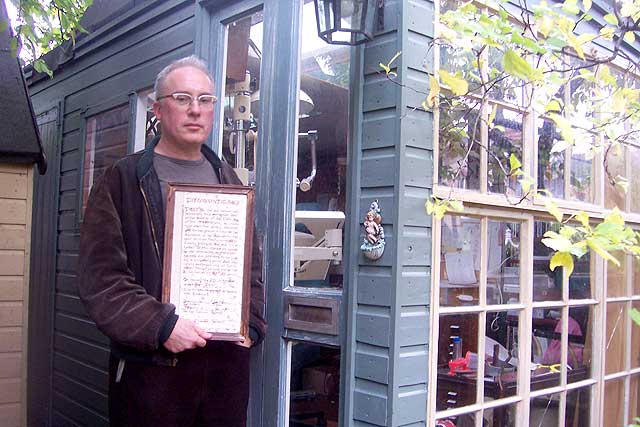
There are very few good photos of Pullman in his shed but above is the structure itself, and below is Ted Dewan holding the agreement about is use, both taken by comics expert Scott McCloud.
(http://www.shedworking.co.uk/2011/09/philip-pullmans-shed.html)


Philip Pullman 
(...) I was born in Norwich in 1946, and educated in England, Zimbabwe, and Australia, before my family settled in North Wales. I received my secondary education at the excellent Ysgol Ardudwy, Harlech, and then went to Exeter College, Oxford, to read English, though I never learned to read it very well.

I found my way into the teaching profession at the age of 25, and taught at various Oxford Middle Schools before moving to Westminster College in 1986, where I spent eight years involved in teaching students on the B.Ed. course. I have maintained a passionate interest in education, which leads me occasionally to make foolish and ill-considered remarks alleging that not everything is well in our schools. My main concern is that an over-emphasis on testing and league tables has led to a lack of time and freedom for a true, imaginative and humane engagement with literature.

My views on education are eccentric and unimportant, however. My only real claim to anyone's attention lies in my writing. I've published nearly twenty books, mostly of the sort that are read by children, though I'm happy to say that the natural audience for my work seems to be a mixed one - mixed in age, that is, though the more mixed in every other way as well, the better.

My first children's book was Count Karlstein (1982, republished in 2002). That was followed by The Ruby in the Smoke (1986), the first in a quartet of books featuring the young Victorian adventurer, Sally Lockhart. I did a great deal of research for the background of these stories, and I don't intend to let it lie unused, so there will almost certainly be more of them.

I've also written a number of shorter stories which, for want of a better term, I call fairy tales. They include The Firework-Maker's Daughter, I Was a Rat!, and Clockwork, or All Wound Up. This is a kind of story I find very enjoyable, though immensely difficult to write.

However, my most well-known work is the trilogy His Dark Materials, beginning with Northern Lights (The Golden Compass in the USA) in 1995, continuing with The Subtle Knife in 1997, and concluding with The Amber Spyglass in 2000. These books have been honoured by several prizes, including the Carnegie Medal, the Guardian Children's Book Award, and (for The Amber Spyglass) the Whitbread Book of the Year Award - the first time in the history of that prize that it was given to a children's book.

I was the 2002 recipient of the Eleanor Farjeon Award for children's literature. At the award ceremony for that prize, which I was very proud to receive, I promised to spend my time in future making fewer speeches and writing more books.

Well, that was an easy promise to make, and an easy one to break as well. The trouble is that people keep asking me to stand up and speak about one thing or another, and I keep finding things to be interested in and talk about. I suppose I shall have to put up with it, and so will my audiences.

I have been very lucky with prizes. Northern Lights won the Carnegie Medal in 1996, and ten years later it was awarded the Carnegie of Carnegies, chosen by readers from all the books that have won this medal in the 70 years since it was first awarded. In 2001 The Amber Spyglass became the first children’s book to win the overall Whitbread Award (now known as the Costa Award). The Whitbread could, and should, have gone to a children’s book long before, but someone had to be first, and I was the lucky one.

In 2005 I was surprised and delighted to win the Astrid Lindgren Award, or rather to share it with the Japanese illustrator Ryoji Arai. This is a wonderful international honour given by the Swedish government to writers, or illustrators, or others connected with bringing books to children. It’s very generous of Sweden to do that, but Astrid Lindgren was a great woman, and they are proud of what she achieved and glad to commemorate her with the award given in her name.

And finally, The Book of Dust. My work on this has been interrupted over the past couple of years, but the book is growing slowly and before long I shall take it up again full-time. What can I tell you about it? Nothing, except that it’s by far the most important thing I’m doing, and I intend to do it as well as I possibly can. When it’s finished, you’ll hear about it, I guarantee. (...)
(Fuente: http://www.philip-pullman.com/)


http://www.philip-pullman.com/
http://www.shedworking.co.uk/2011/09/philip-pullmans-shed.html
http://blogs.law.harvard.edu/tatar/2011/02/06/philip-pullman-on-libraries-and-false-economies/